Choosing reliable Ceftriaxone Sodium suppliers in 2026 requires more than comparing prices or browsing polished websites. Global buyers must examine manufacturing experience, sterile production controls, regulatory records, and supply continuity. Ceftriaxone Sodium is commonly supplied as a sterile injectable powder, so small failures can create serious quality concerns. Batch documentation matters. So does cold-chain planning.
Dr. Tedros Adhanom Ghebreyesus, Director-General of the World Health Organization, said, “Antibiotic resistance is one of the biggest threats to global health, food security, and development today.” His warning gives this supplier review a practical foundation. Buyers should assess GMP compliance, validated sterilization systems, pharmacopoeial testing, qualified packaging, and transparent certificates of analysis. They should also confirm registration requirements in the destination market. A supplier may look capable, yet its export documentation may be incomplete.
This guide reviews leading Ceftriaxone Sodium suppliers for global buyers in 2026. It considers product consistency, manufacturing capacity, regulatory readiness, communication, and delivery performance. Real procurement decisions rarely depend on one metric. A low quotation can hide higher verification costs. A famous manufacturer may still have limited availability in certain regions. No ranking is perfect. Supplier information changes, and buyers must perform independent due diligence before ordering.
Look beyond the brochure. Ask for current production details, testing methods, audit evidence, and recall procedures. Confirm whether the stated product matches the required strength, dosage form, and market authorization. Careful verification protects patients, budgets, and long-term partnerships. The strongest supplier is not always the cheapest. It is the one that can prove quality consistently.

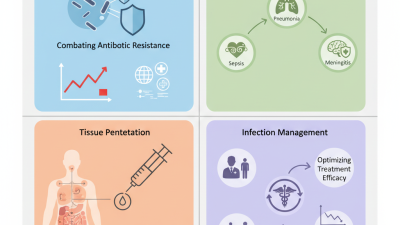
Ceftriaxone sodium is a sterile, injectable third-generation cephalosporin used in hospitals worldwide. It helps manage serious bacterial infections, including pneumonia, bloodstream infections, meningitis, and urinary tract infections. Its global pharmaceutical value comes from broad clinical use, established manufacturing methods, and relatively simple hospital administration after reconstitution. However, treatment decisions must follow local guidelines and qualified medical supervision.
For global buyers, supplier evaluation should go beyond price. Reliable manufacturers provide batch-specific certificates of analysis, sterility results, endotoxin data, impurity profiles, and clear traceability records. Buyers should also verify manufacturing authorization, pharmacopoeial compliance, packaging integrity, and shipping conditions. A practical review may include checking vial seals, powder appearance, labeling language, and document consistency. One overlooked detail can delay customs clearance or hospital delivery. Supply markets are not always tidy, and product quality may vary between batches.
Tips: Request recent quality documents before placing an order. Confirm the intended market’s registration requirements. Ask about stability data after reconstitution. Review recall procedures and complaint response times. Do not rely on a website alone. Direct technical communication often reveals more than sales materials. Some buyers focus heavily on unit cost, which can be a mistake when sterile manufacturing and reliable documentation matter more.
For global buyers, evaluating ceftriaxone sodium suppliers requires more than comparing prices. The supplier should provide a valid GMP certificate, recent inspection history, and complete batch documentation. Check the manufacturing site, not only the trading company. WHO’s Global Antibiotic Resistance Surveillance Report 2025 found that one in six laboratory-confirmed bacterial infections in 2023 showed resistance to antibiotics. This makes consistent potency, sterility, and traceability essential.
Review the certificate of analysis for assay, endotoxins, sterility, moisture, and residual solvents. Ask whether results come from validated methods and independent laboratories. Ceftriaxone is classified within the Watch group under WHO’s AWaRe framework, so responsible supply controls matter. A reliable supplier should explain storage temperatures, transport monitoring, retest periods, and handling after temperature excursions. Small details matter here.
Audit communication quality, too. Can the supplier answer technical questions without vague promises? Request three recent commercial references, deviation records, and a sample recall procedure. I have seen polished documents conceal weak change-control practices; paperwork alone is not proof. Pricing also deserves caution. An unusually low offer may exclude testing, cold-chain protection, or regulatory support. A useful scorecard can assign weight to quality systems, supply continuity, data integrity, lead time, and total landed cost. It is imperfect, but more defensible than choosing the cheapest quotation. Check registration requirements in each destination market before placing an order.
The 2026 ceftriaxone sodium market is shaped by hospital demand, procurement rules, and antimicrobial stewardship. WHO classifies ceftriaxone as a Watch antibiotic under its AWaRe framework. This classification increases scrutiny around prescribing, sourcing, and supplier documentation.
WHO’s Global Antimicrobial Resistance and Use Surveillance System shows uneven antibiotic-use reporting across countries. That gap affects demand forecasting. IQVIA’s Global Use of Medicines 2024 report also identifies emerging markets as important drivers of medicine-volume growth. However, ceftriaxone demand is not evenly distributed. Public tenders, surgical capacity, and injectable-medicine access create sharp regional differences.
Reliable suppliers should demonstrate current GMP compliance, validated sterile manufacturing, and consistent assay results. Buyers should review sterility, endotoxin, particulate-matter, and impurity data for every approved presentation. A complete regulatory package matters. So does manufacturing history.
Check the batch records.
The WHO Global Antimicrobial Resistance and Use Surveillance System reported that bacterial antimicrobial resistance was directly responsible for about 1.27 million deaths in 2019. This makes quality failures especially serious. Supplier comparisons should include inspection history, change-control procedures, pharmacopoeial testing, and supply continuity. Some market reports publish conflicting revenue estimates, partly because they group ceftriaxone with broader injectable antibiotics. That limitation deserves attention before using any forecast for 2026 purchasing decisions.
2026 Best Ceftriaxone Sodium Suppliers for Global Buyers
International Quality, Regulatory, and Documentation Requirements
Global buyers should evaluate ceftriaxone sodium suppliers through documented quality systems, not price alone. The manufacturing site should provide a valid GMP certificate, manufacturing license, and recent inspection history. For injectable products, buyers need evidence of sterility controls, endotoxin testing, particulate inspection, and validated aseptic processes. These details show practical manufacturing experience.
A complete supplier package should include a current Certificate of Analysis, product specification, batch release records, stability data, and packaging information. Each document should match the same batch number, production date, and test method. Regulatory teams may also request a Drug Master File, Certificate of Pharmaceutical Product, free sale certificate, and export authorization. Document consistency matters greatly.
Small gaps can create large delays.
Buyers should check whether the CoA uses recognized pharmacopoeial methods, such as USP, Ph. Eur., or another accepted standard. They should also review impurity profiles, residual solvents, water content, and container-closure integrity. Supplier audits can reveal weak change-control practices or unclear data ownership. No supplier gets every detail right. A careful review may still find missing translations, outdated certificates, or inconsistent signatures. These issues require correction before commercial approval, especially when different countries apply different registration expectations.
International Quality, Regulatory, and Documentation Requirements
Global buyers should also request a current GMP certificate, certificate of analysis, batch-release documentation, manufacturing-site details, sterility and endotoxin controls, stability evidence, packaging specifications, and legally valid regulatory documents. Exact requirements differ by destination market and importing authority.
2026 Best Ceftriaxone Sodium Suppliers for Global Buyers
How Global Buyers Can Select and Verify a Reliable Supplier
Start with the site, not the brochure. Confirm the manufacturing address, legal authorization, and current GMP certificate through the issuing regulator. WHO’s Global Surveillance and Monitoring System reports that roughly one in ten medical products in low- and middle-income countries may be substandard or falsified. The figure covers medicines broadly, but it shows why supplier verification cannot depend on price or polished documents alone.
Request a recent batch certificate of analysis for ceftriaxone sodium. Check identity, assay, sterility, bacterial endotoxins, water content, and impurity results against the applicable pharmacopoeia. Ask whether testing was performed by an independent ISO/IEC 17025 laboratory. Review the certificate’s batch number, test dates, methods, and authorized signature. Small inconsistencies matter. A certificate copied across several batches is a warning sign.
Audit the supply chain in practical detail. Verify raw-material traceability, container integrity, temperature records, deviation handling, and recall procedures. For injectable products, inspect vial closure systems and visible-particle controls. WHO’s 2022 Global Benchmarking Tool emphasizes effective regulatory oversight, inspection, and quality-control systems as key maturity indicators. Still, a high regulatory rating does not replace product-specific testing. Send sealed samples to an independent laboratory before contract approval. Not the brochure. Useful, but uncomfortable. Supplier records can look complete while critical evidence remains missing. Reliable purchasing requires documented checks, repeated review, and clear acceptance criteria.
| Supplier Category | Core Product Scope | Documents to Request | Objective Verification Points | Typical Commercial Fit | Key Risk Signal |
|---|---|---|---|---|---|
| API manufacturer | Ceftriaxone sodium sterile or non-sterile active pharmaceutical ingredient for downstream formulation | Current GMP certificate, manufacturing-site details, specification, recent batch CoA, stability data, DMF or equivalent regulatory package, SDS | The legal manufacturer, site address, batch number, test methods, and specification limits should match across the CoA and regulatory documents | Best suited to licensed pharmaceutical manufacturers purchasing bulk material | A trading company presents itself as the manufacturer but cannot provide an auditable production site or authorization letter |
| Finished-dose manufacturer | Sterile ceftriaxone sodium powder for injection in vial presentations, subject to the destination-market authorization | Product registration or marketing authorization evidence, GMP certificate, product dossier, approved labeling, packaging specification, batch-release CoA | Confirm dosage strength, vial configuration, route of administration, storage conditions, shelf life, and approved market before purchase | Suitable for hospitals, public tenders, wholesalers, and national distributors | The supplier offers finished medicine without verifiable registration, batch-release controls, or destination-country compliance |
| Authorized pharmaceutical distributor | Sourced API or finished dosage products purchased from approved manufacturers | Manufacturer authorization, distribution license, traceability records, original CoA, storage and transport procedures, recall procedure | Verify chain of custody, lot traceability, warehouse conditions, and whether repacking or relabeling is performed | Useful when buyers need consolidated sourcing, local inventory, or import support | No written authorization from the original manufacturer or inconsistent lot and packaging information |
| Contract manufacturing partner | Custom manufacturing, filling, packaging, or market-specific production under a quality agreement | Quality agreement, technical agreement, GMP evidence, process description, validation summary, change-control procedure | Clarify responsibility for deviations, complaints, recalls, release testing, artwork approval, and regulatory submissions | Appropriate for private-label products, regional registration, or long-term supply programs | Responsibilities are not assigned in writing, especially for batch release and regulatory changes |
| Qualified sourcing agent | Supplier identification, due diligence, sampling coordination, and export documentation support | Written mandate, supplier audit report, conflict-of-interest declaration, sample chain-of-custody record, commercial invoice | The agent should disclose the actual manufacturer and should not replace independent quality qualification by the buyer | Helpful for buyers entering unfamiliar manufacturing regions | The agent refuses to disclose the production site or asks for payment to an unrelated entity |
| Supplier with sterile-injection capability | Sterile powder filling and packaging for ceftriaxone sodium injection | Sterile manufacturing GMP evidence, environmental-monitoring summary, media-fill validation status, container-closure information, sterility and endotoxin test procedures | Confirm controls for aseptic processing, bioburden, bacterial endotoxins, sterility, particulate matter, and container-closure integrity | Required when purchasing finished sterile injectable medicine | The supplier provides only a chemical assay and cannot demonstrate sterile manufacturing controls |
| Cold-chain or temperature-controlled logistics provider | International transport, warehousing, customs handling, and delivery under defined storage conditions | Lane qualification, temperature-monitoring records, packing configuration, excursion procedure, insurance, customs documents | Storage and transport conditions must follow the approved product labeling and the supplier’s validated shipping profile | Important for long-distance shipments, high-temperature routes, and regulated import programs | No temperature records, unclear handover points, or shipment packaging that is not qualified for the route |
0086-15628869272