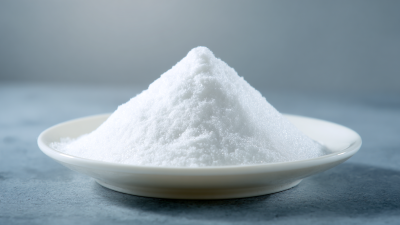
The 2026 market for Tylosin Tartrate is shaped by stricter quality expectations, changing veterinary regulations, and careful procurement. Buyers need suppliers that show consistent manufacturing, clear documentation, and dependable communication. A polished website is not enough. Batch records matter. So does traceability.
This introduction frames a practical review of leading Tylosin Tartrate suppliers worldwide. It considers manufacturing experience, quality systems, export capability, technical support, and product consistency. Relevant evidence may include GMP credentials, independent testing, certificates of analysis, stability data, and documented raw-material controls. These details help procurement teams compare suppliers beyond price.
A reliable supplier should explain its product specifications in plain language. It should identify assay limits, packaging options, storage conditions, and supported dosage forms. Buyers should confirm whether the product suits approved veterinary applications in their jurisdiction. Requirements vary between countries, and broad supplier claims do not replace local regulatory review.
The ranking perspective remains cautious. Public information can be incomplete, outdated, or presented selectively. Even established manufacturers may have uneven lead times or limited regional support. That deserves attention. Supplier performance should be checked through current documents, reference checks, sample evaluation, and direct technical questions.
This overview does not treat visibility as proof of superiority. Instead, it highlights practical signals of competence, accountability, and long-term reliability. Readers can use these signals when assessing Tylosin Tartrate sourcing options for 2026. Final decisions should involve qualified veterinarians, regulatory professionals, and documented quality procedures. Small checks prevent expensive mistakes.
Tylosin tartrate is a water-soluble macrolide antibiotic used mainly in veterinary pharmaceuticals. It is the tartrate salt of tylosin, improving handling in oral powders and drinking-water formulations.
Its action targets the bacterial 50S ribosomal subunit and limits protein synthesis. The effect is most relevant against susceptible Gram-positive organisms and selected respiratory pathogens.
Not a human medicine.
Approved uses vary by jurisdiction, species, dosage form, and withdrawal requirements. Veterinary products may support treatment of respiratory or enteric infections in poultry, swine, cattle, and other food-producing animals.
A 2024 analysis by Grand View Research estimated the global animal health market at more than US$60 billion. That wider market does not measure tylosin tartrate alone, but it shows the scale of veterinary pharmaceutical demand. WOAH’s 2024 antimicrobial-use reporting also emphasizes stronger monitoring and responsible use across animal production.
Reliable suppliers should provide batch-specific assay results, impurity profiles, microbiological quality data, and traceable manufacturing records. Buyers often review HPLC identification, water content, residue limits, and pharmacopeial compliance before approval.
Practical details matter: a powder should dissolve evenly, remain stable during storage, and carry clear retest information.
Market reports can be useful, but their tylosin estimates are often opaque. That is a weakness worth admitting. Regional registration databases and independent quality audits usually offer stronger evidence than rankings alone.
When evaluating global tylosin tartrate suppliers for 2026, quality evidence should outweigh catalogue size. The OECD-FAO Agricultural Outlook 2024–2033 projects agricultural and fish production to grow by about 1.1% annually. This expansion may increase demand for consistent veterinary ingredients. However, volume alone does not prove supplier reliability.
Check the certificate of analysis, assay method, impurity profile, and retest period. Confirm whether testing follows an applicable pharmacopoeial monograph or a validated internal method. Review batch records, change-control procedures, and temperature logs. WHO’s Global Antimicrobial Resistance and Use Surveillance System report covered data from 114 countries in its 2023 publication. That global scope reinforces the need for traceability and responsible antimicrobial oversight.
Manufacturing approval should be independently verified, not accepted from a website screenshot. Ask for recent audit summaries, deviation histories, and evidence of microbiological control. Packaging should show batch numbers, storage conditions, and tamper protection. A low quotation may hide weak testing or unstable logistics. Price alone proves little. I would also compare three commercial batches, because one attractive sample can mislead. Supplier communication matters during delays, recalls, or specification changes. This is often overlooked. A technically strong supplier should provide clear responses, controlled documentation, and realistic lead times.
Demand for veterinary anti-infective ingredients remains closely linked to livestock production. Fortune Business Insights estimated the global veterinary pharmaceuticals market at about USD 45.9 billion in 2023, with continued growth expected through 2030. This wider market supports steady interest in tylosin tartrate, especially across poultry, swine, and cattle supply chains.
Supplier quality varies sharply. Experienced buyers should verify GMP certification, batch-level certificates of analysis, residual-solvent results, and controlled storage records. A reliable supplier should also provide manufacturing-site details and traceability from raw material to finished powder. The World Organisation for Animal Health reported continuing global attention on antimicrobial use and surveillance in food-producing animals. That makes documentation more important than a low quoted price.
Look beyond the catalogue.
Regional sourcing patterns are also changing. Asia remains a major production base for veterinary active ingredients, while European, North American, Latin American, and Middle Eastern buyers increasingly request audit-ready compliance files. Lead time, export documentation, and temperature control can affect the real purchasing cost. Some supplier pages appear technically strong but provide little evidence about batch consistency. That is a warning sign. Buyers should compare at least three recent batches, not one attractive sample. The process is slower, but safer. Data from the supplier must still be independently reviewed.
For 2026, reliable tylosin tartrate sourcing depends on documented quality, not attractive quotations. FDA’s 2023 Summary Report recorded a 38% decline in medically important antimicrobial sales for food-producing animals since 2015. This regulatory trend increases scrutiny of suppliers, manufacturing sites, and distribution records.
Each lot should include a complete certificate of analysis, batch number, manufacturing date, retest date, and storage conditions. Testing should cover assay, related substances, moisture, residual solvents, and microbiological quality. HPLC data must be traceable to validated methods. Pharmacopoeial alignment with applicable USP or Ph. Eur. requirements provides useful control, but a certificate alone is not enough. Review the raw data.
Manufacturers should demonstrate current GMP compliance, effective deviation handling, change-control procedures, and validated cleaning systems. ISO 9001 can support quality management, yet it does not replace pharmaceutical GMP. WHO’s 2024 GLASS report continues to highlight uneven antimicrobial surveillance across regions, making local registration and pharmacovigilance checks essential. Export documents should match the destination market’s veterinary regulations, labeling rules, and import permits.
A practical audit should examine sealed drums, humidity indicators, warehouse mapping, and recall procedures. Supplier qualification should include an independent quality audit when possible. No supplier is perfect. Some documents look complete but lack investigation depth. That gap deserves attention before approval.
The chart shows the publication or effective year of major quality, laboratory, and pharmaceutical manufacturing frameworks commonly used when qualifying tylosin tartrate suppliers. These frameworks support evaluation of GMP systems, analytical testing competence, quality management, and regulatory readiness.
References: ISO 9001:2015; ISO/IEC 17025:2017; ICH Q7 Good Manufacturing Practice Guide for Active Pharmaceutical Ingredients, finalized 2000; EU GMP Volume 4, Part II, effective 2013; WHO Technical Report Series No. 986, Annex 2, published 2014. The chart does not represent company rankings or confirm certification status for any individual supplier.
2026 Top Tylosin Tartrate Suppliers Worldwide
Purchasing teams should assess more than price when sourcing tylosin tartrate. Start with an audit-ready quality package, including batch-specific CoAs, assay results, impurity profiles, and microbiological data. Verify manufacturing controls, change-notification procedures, and traceability to the original production site. A current GMP certificate helps, but it does not replace an independent supplier audit. WOAH’s 2024 report, using data from more than 80 countries, reported a decline in antimicrobial use intensity between 2017 and 2022. This trend increases pressure for accurate forecasting and responsible purchasing.
Supply-chain resilience also needs practical testing. Compare standard lead times, minimum order quantities, port exposure, customs documentation, and backup production capacity. Request stability data for the intended storage conditions. Check packaging integrity after simulated transport. A low quote can hide longer release times or higher testing costs. I would challenge my own forecast, too. Seasonal demand, veterinary policy changes, and farm inventory may quickly distort historical averages. UNEP’s 2023 report on antimicrobial resistance highlights pollution from pharmaceutical and agricultural activities, reinforcing the need for controlled handling and documented disposal.
Tips: Build a two-source qualification plan before shortages appear. Score suppliers against quality, delivery, documentation, technical support, and total landed cost. Review performance quarterly. Do not approve a supplier from a brochure alone. Ask for recent audit findings, deviation trends, and evidence of consistent batch performance. Credible data matters more than polished sales language.
| Supplier-Selection Dimension | Relevant Purchasing Data | What Buyers Should Verify | Supply-Chain Impact | Recommended Assessment |
|---|---|---|---|---|
| Product Identity | Tylosin tartrate is a water-soluble tartrate salt of tylosin, a macrolide veterinary antimicrobial. The substance is commonly identified by CAS RN 74610-55-2. | Confirm the exact salt form, grade, intended dosage form, applicable pharmacopoeial reference, and product-specific specification. | Incorrect salt form or grade can cause formulation, registration, and customs delays. | Mandatory document check |
| Intended Market | Veterinary antimicrobial requirements differ by destination country, animal species, indication, dosage form, and whether the material is an active pharmaceutical ingredient or a finished product. | Check the importing authority’s registration, import-license, residue-control, labeling, and prescription requirements before placing an order. | Regulatory non-compliance may prevent customs clearance or commercial release. | Market-specific review |
| Quality System | Manufacturing controls should be appropriate for the intended use and aligned with applicable good manufacturing practice requirements. | Request current GMP evidence, quality manual or audit summary, change-control procedure, deviation and CAPA records, and recent inspection information where available. | Weak quality systems increase batch rejection, recall, and continuity risk. | High-priority qualification criterion |
| Batch Documentation | A batch-specific certificate of analysis should normally identify the lot, manufacturing date, retest or expiry date, test methods, results, and release status. | Compare the certificate with the agreed specification and request chromatograms or raw-data summaries for critical tests when justified. | Incomplete documents can delay release at the buyer’s quality-control site. | Required for every lot |
| Analytical Testing | Typical release testing may include identification, assay or potency, related substances, water or loss on drying, residue on ignition or sulfated ash, microbial quality, and appearance, subject to the agreed specification. | Confirm validated methods, method references, laboratory accreditation where relevant, sampling plan, and acceptance limits. | Different test methods or limits can make otherwise similar quotations non-comparable. | Technical bid comparison |
| Contamination Controls | Controls may be needed for residual solvents, elemental impurities, microbial contamination, cross-contamination, and other impurities relevant to the manufacturing process. | Review the risk assessment, cleaning validation approach, allergen or sensitizer controls where applicable, and contaminant test results. | Contamination findings can affect product release and regulatory acceptance. | Risk-based verification |
| Packaging and Storage | Packaging should protect the material from moisture, contamination, and physical damage. Storage conditions must follow the product label or approved specification. | Confirm container-closure system, tamper evidence, net weight tolerance, palletization, temperature limits, humidity controls, and handling instructions. | Moisture exposure or unsuitable storage may reduce quality or shorten usable shelf life. | Pre-shipment confirmation |
| Shelf-Life Management | Remaining shelf life at delivery depends on the validated stability period, manufacturing date, transport duration, and the buyer’s internal minimum-life requirement. | Set a minimum remaining shelf-life requirement in the purchase order and request stability data or an approved retest policy. | Short remaining shelf life increases inventory write-off and production-planning risk. | Contractual requirement |
| Trade and Shipping Terms | International quotations should clearly state the applicable Incoterms® 2020 rule, named place, currency, packaging basis, insurance responsibility, and transport mode. | Compare equivalent landed-cost scenarios and confirm export documents, commercial invoice, packing list, certificate of origin, and transport documentation. | Unclear responsibility for freight, insurance, customs, or documentation can create unexpected costs. | Commercial comparison |
| Supplier Qualification | Qualification should evaluate manufacturing location, legal entity, authorized sales channel, production capacity, quality history, financial stability, and business continuity controls. | Use a supplier questionnaire, quality agreement, audit or remote assessment, reference checks, and verification of official registration documents. | Intermediary-only supply chains may add traceability, communication, and continuity risks. | Two-stage qualification |
| Supply Continuity | Continuity depends on qualified manufacturing capacity, critical raw-material availability, backup utilities, validated alternate sites or processes, inventory policy, and logistics resilience. | Request a business-continuity plan, lead-time history, minimum-order quantity, allocation policy, safety-stock approach, and notification period for major changes. | A technically compliant supplier may still be unsuitable if it cannot support regular replenishment. | Continuity stress test |
| Change Control | Changes to site, process, raw materials, specifications, analytical methods, packaging, or legal manufacturer may require prior review and regulatory notification. | Include written prior-notification obligations, change classification, document-update requirements, and sample or requalification provisions. | Unreported changes can invalidate qualification or create a regulatory filing gap. | Quality-agreement clause |
| Environmental and Responsible Sourcing | Manufacturing and disposal controls should address wastewater, antibiotic residues, worker safety, hazardous materials handling, and applicable environmental permits. | Request relevant permits, environmental statements, occupational-safety records, and evidence of responsible waste-management practices. | Environmental or social-compliance failures may create reputational, legal, or customer-approval risks. | ESG due diligence |
| Commercial Evaluation | The lowest quoted unit price is not necessarily the lowest total cost. Evaluation should include testing, documentation, freight, insurance, duties, financing, inspection, inventory, and rejection costs. | Use a landed-cost model and score quality, regulatory readiness, delivery reliability, payment terms, complaint handling, and continuity together with price. | A total-cost approach reduces the risk of selecting a low-price but high-risk source. | Weighted-scorecard method |
| Recommended RFQ Package | A complete request should define product identity, grade, specification, packaging, annual quantity, order pattern, destination, delivery term, documentation, quality requirements, and payment conditions. | Require a formal quotation, technical data package, batch certificate sample, safety data sheet, manufacturing-site details, and proposed delivery schedule. | Standardized RFQs make quotations comparable and shorten technical-commercial approval. | Best-practice sourcing step |
0086-15628869272