Why Choose Doxycycline Hcl for Your Global Sourcing Needs?
In the realm of global sourcing, Doxycycline Hcl stands out as a preferred option. This antibiotic has proven efficacy against various infections, making it essential in healthcare. Its affordability and accessibility play a significant role in its popularity among pharmaceutical companies.
Choosing Doxycycline Hcl involves careful consideration. Buyers must evaluate suppliers based on quality, regulatory compliance, and reliability. Not all suppliers meet the rigorous standards required for safe distribution. The potential risks of substandard products loom large. Hence, trusting in reputable vendors is crucial to ensure patient safety.
Doxycycline Hcl serves as a vital resource. It addresses a range of bacterial infections effectively. However, balancing cost and quality presents ongoing challenges. Crafting a sourcing strategy that emphasizes these factors is essential for sustainable operations. Finding the right partner in this endeavor can make all the difference in achieving success.
Overview of Doxycycline Hcl and Its Uses in Global Sourcing
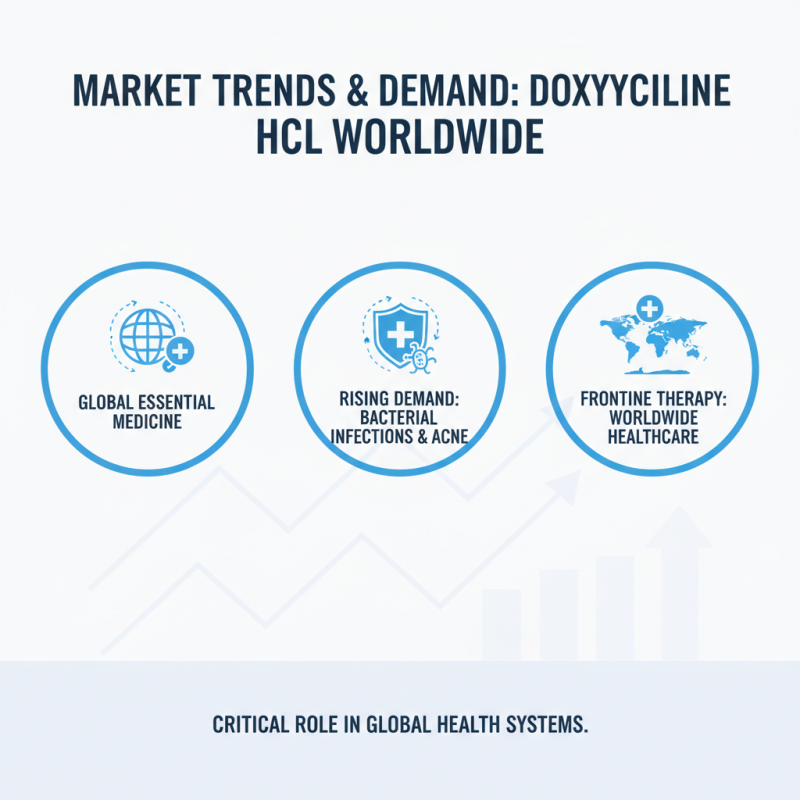
Doxycycline hydrochloride, a broad-spectrum antibiotic, plays a crucial role in global sourcing. Its efficacy against various bacterial infections makes it a reliable choice in healthcare supply chains. According to a global market report, the demand for tetracycline antibiotics, including doxycycline, is expected to grow at a CAGR of 5.8% from 2021 to 2028. This trend highlights its significance in public health and pharmaceutical sectors.
Doxycycline is used to treat conditions such as respiratory infections, acne, and malaria. Its versatility ensures consistent availability across different regions. Many sourcing experts emphasize the need for quality assurance in obtaining medicinal compounds. Sourcing doxycycline requires a careful selection of manufacturers with good manufacturing practices (GMP) certifications. The reliability of suppliers can greatly influence the supply chain's efficiency. In some reports, challenges are identified, such as fluctuating prices and inconsistencies in quality, which demand thorough vetting of suppliers.
Furthermore, the environmental impact of sourcing antibiotics, including doxycycline, merits attention. As the industry pushes for increased transparency, many manufacturers face scrutiny. Addressing these issues can improve sustainability and safety in global sourcing operations. While doxycycline remains a valuable asset in treatment protocols, responsible sourcing practices must also be prioritized to mitigate potential risks.
Global Sourcing of Doxycycline Hcl: Usage Trends by Region
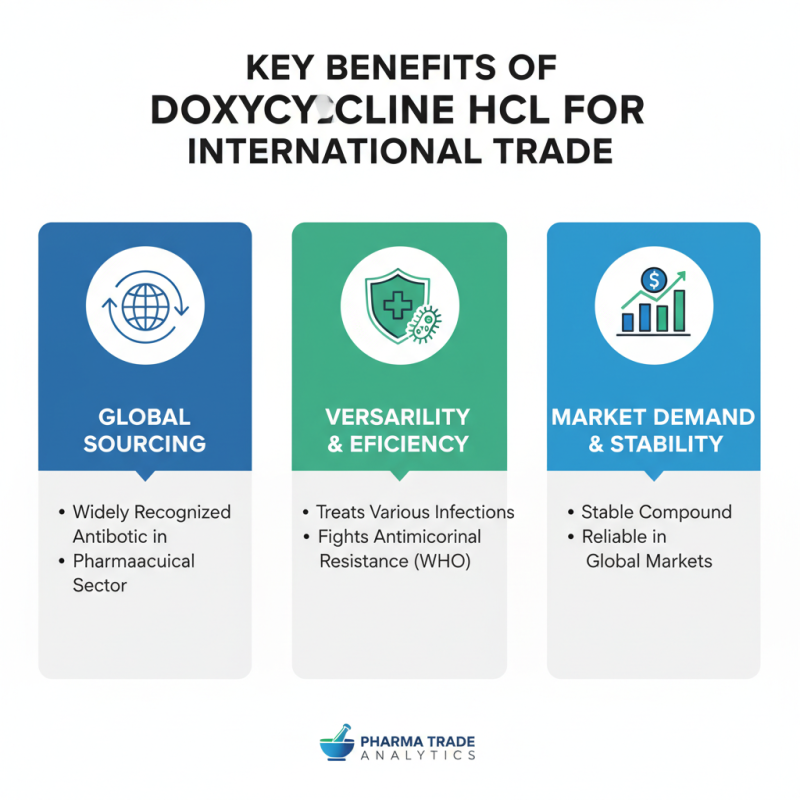
Key Benefits of Doxycycline Hcl for International Trade
Doxycycline HCl is a widely recognized antibiotic that plays a vital role in global sourcing. Its versatility makes it essential in international trade, specifically in the pharmaceutical sector. According to the World Health Organization, antimicrobial resistance is a growing concern, and Doxycycline HCl effectively treats various infections, making it a crucial commodity. The drug’s stability and efficacy in treating bacterial infections contribute significantly to its demand in global markets.
When considering Doxycycline HCl for sourcing, understanding its safety and reliability is key. It’s reported that over 50% of distributed antibiotics could contribute to resistance. Therefore, ensuring a high standard of quality in sourcing is crucial. Reliable suppliers implement rigorous quality checks, maintaining compliance with international standards. This commitment to excellence can enhance supply chain stability and reduce risks.
Tips: Always check the supplier's certifications. Look for quality assurance processes in place. Assessing a supplier's reliability can save costs in the long run. Establish relationships with suppliers who prioritize transparency. As the market evolves, keeping up with regulations and standards can be challenging. However, investing time in learning can differentiate effective sourcing strategies from ineffective ones.
Quality Assurance and Regulations for Doxycycline Hcl Sourcing
When sourcing Doxycycline Hcl, understanding quality assurance and regulations is vital. Various international standards govern the production of pharmaceuticals. Meeting these standards ensures that the product is safe and effective. Regulatory bodies analyze compliance before granting approvals. This vigilance protects public health.
Manufacturers often face challenges in meeting these requirements. Quality control tests are critical. These tests verify purity and potency. Moreover, supply chain transparency is essential. All stakeholders must ensure that the sourcing meets set criteria. Failing to do so can lead to harmful effects.
It’s crucial to rely on experienced suppliers. They understand the complexities involved in sourcing Doxycycline Hcl. Engaging experts helps navigate regulatory landscapes. However, not all suppliers guarantee compliance. Researching their track record can provide insights. Trustworthiness in sourcing is non-negotiable.
Why Choose Doxycycline Hcl for Your Global Sourcing Needs?
| Dimension |
Description |
Importance |
Regulatory Body |
| Quality Control |
Ensures product meets required standards and specifications. |
Critical for safety and efficacy of the drug. |
FDA, EMA |
| Supplier Verification |
Assessment of suppliers' capabilities and compliance. |
Ensures reliability in sourcing. |
WHO, GMP |
| Documentation & Certification |
Includes CoA, GMP certificates, and other necessary papers. |
Vital for compliance and traceability. |
FDA, ISO |
| Regulatory Compliance |
Adherence to local and international regulations. |
Prevents legal issues and product recalls. |
FDA, EMA, TGA |
| Market Demand |
Current trends and requirements in the pharmaceutical sector. |
Influences sourcing strategy and product availability. |
Market Research |
Cost-Effectiveness of Doxycycline Hcl in Global Markets
Doxycycline Hcl is becoming increasingly popular in global sourcing, particularly due to its cost-effectiveness. Recent reports highlight that generic doxycycline can be acquired at approximately 50% less than branded alternatives in many markets. This significant price difference makes it an attractive option for both suppliers and consumers.
Moreover, the stable manufacturing process of doxycycline Hcl ensures consistent quality across batches. According to the World Health Organization, the global market for doxycycline is projected to grow at a CAGR of 7.9% between 2021 and 2026. This highlights the drug's relevance in treating various infectious diseases efficiently.
However, challenges exist. Variability in quality from different suppliers can cause uncertainty. Furthermore, regulatory compliance is crucial, as it impacts sourcing decisions. For purchasers, evaluating suppliers’ certifications and manufacturing practices becomes essential. Investing time in due diligence can minimize risks and ensure reliable sourcing. Balancing cost with quality is vital for effective decision-making in this sector.