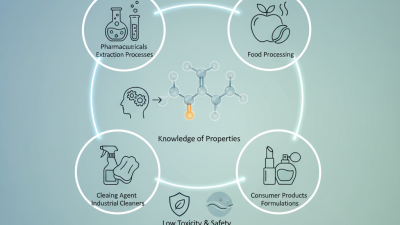
The demand for Ethyl Acetate is growing rapidly in various industries, especially in the production of paints, coatings, and adhesives. According to a report by Market Research Future, the global Ethyl Acetate market is projected to reach $6.8 billion by 2026, evidencing its significance in the chemical sector. This growth is driven by the compound's favorable properties, such as its effective solvent capabilities and low toxicity.
Sourcing Ethyl Acetate efficiently challenges many companies. The nuances of supply chain dynamics and vendor reliability can impact production cycles. Research from the American Chemical Society suggests that sourcing disruptions can lead to increased costs and project delays. Businesses must navigate these complexities to ensure a steady supply.
Focusing on strategic partnerships is crucial. Reliable suppliers can optimize procurement practices and enhance product quality. However, companies sometimes overlook the importance of these relationships, risking both quality and efficiency. As the market evolves, it's essential for companies to refine their sourcing strategies, ensuring access to high-quality Ethyl Acetate while maintaining cost-effectiveness.

Ethyl acetate is a clear, volatile liquid with a characteristic sweet odor. It is widely used as a solvent in various industries, including pharmaceuticals, coatings, and adhesives. Its ability to dissolve a range of substances makes it valuable. According to a 2022 market report, the global ethyl acetate market was valued at over $3 billion, projected to grow at a CAGR of 5% through 2030. This growth indicates significant industrial reliance on ethyl acetate.
In terms of properties, ethyl acetate has a relatively low boiling point of 77 °C and a flash point of 13°C. These characteristics make it suitable for applications that require rapid evaporation. It is also miscible with alcohol and ether but less so with water. Using ethyl acetate in industrial applications requires careful handling due to its flammability. A study by the National Institute of Standards and Technology highlighted the importance of understanding these properties for safe use.
Ethyl acetate is not just a simple solvent; it plays a role in complex processes. Its efficiency can vary depending on the application and mixture. Companies often face challenges in sourcing quality ethyl acetate that meets specific industry standards. Ensuring high purity levels is crucial, as impurities can alter performance. Proactive sourcing strategies based on reliable data can help mitigate risks. Understanding the balance between cost and quality is key for effective application.
When sourcing ethyl acetate, identifying reliable suppliers is critical. Quality, consistency, and regulatory compliance are essential criteria. A recent industry report indicates that around 30% of suppliers fail to meet basic quality standards. This statistic emphasizes the importance of thorough supplier vetting.
Potential suppliers should be evaluated based on their certifications. Look for ISO 9001 or equivalent certifications. This indicates that they adhere to international quality management standards. Inadequate certifications can lead to issues down the line, including production delays.
It's also crucial to assess the supplier's track record. A supplier with a history of missed delivery timelines or quality complaints poses a significant risk. The same report reveals that 25% of companies experience supply chain disruptions due to unreliable vendors. Engaging in regular audits can help maintain supplier reliability. Consider establishing a robust communication channel to discuss any concerns or changes in demands. This proactive approach fosters a stronger partnership and ensures consistency.
The global demand for ethyl acetate is on the rise, driven by its widespread use in paints, coatings, and adhesives. According to a recent industry report, the market is projected to grow at a compound annual growth rate (CAGR) of approximately 4.8% through 2028. This demand is influenced by trends in the automotive and construction sectors, where environmentally friendly solvents are gaining popularity.
Sourcing ethyl acetate efficiently requires careful attention to market dynamics. The recent supply chain disruptions have highlighted the importance of diversifying suppliers. Companies should consider local sourcing options to reduce reliance on international trade. Establishing strong relationships with multiple suppliers can enhance reliability.
Be aware of pricing fluctuations based on market conditions. Keeping track of competitor pricing can provide insights into effective procurement strategies. Additionally, regular reassessment of contracts is essential. Explore partnerships with manufacturers to secure better pricing. Finding a balance between cost and quality can be challenging but vital for operational efficiency.
| Tip | Description | Market Trend | Supply Dynamics | Demand Trends |
|---|---|---|---|---|
| 1 | Understand Quality Standards | Increasing focus on purity levels | Stable supply with fluctuations | Growing demand in pharmaceuticals |
| 2 | Evaluate Supplier Reliability | Trend towards long-term partnerships | Supply chain integration on the rise | Increase in consumer goods applications |
| 3 | Assess Pricing Models | Price volatility due to raw material costs | Limited suppliers impacting prices | Fluctuating demand in industrial sectors |
| 4 | Consider Geographic Location | Regional production capacities vary | Regional fluctuations in availability | Demand concentrated in urban areas |
| 5 | Leverage Technology | Adoption of automation and data analytics | Digital channels dominating supply chains | Tech-driven insights enhancing demand forecasts |
| 6 | Monitor Regulatory Changes | Increasing regulations affecting production | Compliance costs affecting supply | Sustainability demands driving new standards |
| 7 | Establish Clear Communication | Importance of transparency and trust | Efficient supply chain coordination | Increased requests for real-time updates |
| 8 | Diversify Supply Base | Risk management through diversification | Globalization of suppliers | Varied demand across different regions |
| 9 | Negotiate Long-term Contracts | Securing price stability | Plan for long-term supply stability | Demand forecasting through contracts |
| 10 | Evaluate Environmental Impact | Shift towards sustainable sourcing | Regulations driving greener practices | Consumer preference shifting towards eco-friendly products |
Managing costs in sourcing ethyl acetate can be a complex task. Prices fluctuate based on market trends and availability. Monitoring these variations can impact overall procurement expenses significantly. Buyers should leverage multiple suppliers to enhance negotiation leverage. Establishing relationships with vendors can also provide insights into upcoming price changes.
Implementing a just-in-time inventory approach may reduce storage costs. However, this strategy requires careful planning. It’s essential to ensure a balance between supply and demand. Overestimating needs can lead to excess inventory and wasted funds. Environmental regulations can also affect production, causing unexpected price hikes.
Regularly reviewing contracts and assessing supplier performance can reveal cost-saving opportunities. It is vital to stay informed about industry trends and alternative sourcing methods. Many industries are moving towards more sustainable options. Exploring these alternatives may not only cut costs but also align with corporate responsibility goals. However, the shift requires cautious evaluation to avoid compromising product quality or meeting compliance standards.
Quality assurance in sourcing ethyl acetate is paramount. It ensures that the product meets industry standards and is safe for use. Compliance with regulations is not just a recommendation; it’s essential. Ethyl acetate must be produced under specific guidelines to guarantee its purity and effectiveness. Checking certifications and documentation from suppliers can help establish both quality and reliability.
Conducting regular audits is another crucial practice. These audits help in identifying areas that need improvement. Suppliers may sometimes overlook compliance details. Such oversights could lead to batch variations. These can affect the performance of ethyl acetate in various applications. Investing time in supplier evaluation and quality checks can prevent costly errors.
Tracking the sourcing process provides transparency. Understanding where your ethyl acetate comes from is vital. Engaging with suppliers who prioritize sustainable practices can further enhance quality. Relying solely on price can be misleading. A cheaper option may not always meet the necessary industry standards. Careful analysis of the sourcing chain fosters better decision-making and long-term partnerships.
0086-15628869272