What is Ethyl Levulinate used for in Global Markets?
Ethyl Levulinate is gaining traction in global markets for its versatile applications. Dr. Sarah White, an industry expert at GreenChem Innovations, emphasizes, "Ethyl Levulinate is transforming how we view bio-based solvents." As sustainability becomes paramount, this compound emerges as a key player.
In the food and fragrance industries, Ethyl Levulinate serves as a natural flavoring agent. Its pleasant fruit-like aroma adds depth to various products. Furthermore, its role in biofuels and solvent production highlights its importance in advancing eco-friendly initiatives.
Despite its growing presence, challenges remain. Many manufacturers are unaware of its full potential. Education and awareness are crucial for maximizing Ethyl Levulinate's benefits. Collaboration among stakeholders could pave the way for innovative solutions. Therefore, the future looks promising yet requires concerted efforts to overcome existing barriers.
Ethyl Levulinate: An Overview of Its Chemical Properties
Ethyl levulinate, with the chemical formula C7H12O3, is an ester derived from levulinic acid. It appears as a colorless liquid with a sweet, fruity odor. This compound is growing in popularity in global markets due to its versatile applications in various industries. Its hydrophilic nature allows it to be used as a solvent in pharmaceuticals and food formulations. Furthermore, its properties make it an ideal candidate for use in flavoring and fragrance industries.
Recent data from industry reports suggest that the global market for ethyl levulinate is projected to expand at a CAGR of approximately 5.3% from 2023 to 2030. This growth is driven by increasing demand for natural ingredients and sustainable solutions. Ethyl levulinate can also serve as a potential bio-based alternative to petroleum-derived solvents, appealing to environmentally conscious consumers.
Tips: When considering the use of ethyl levulinate, evaluate your target market's preferences. Keep in mind that while its applications are diverse, the compound’s precise stability and safety in formulations must be thoroughly investigated. Remember that high-quality sourcing is essential for consistent results.
Ethyl Levulinate Applications in Global Markets
Applications of Ethyl Levulinate in the Food Industry
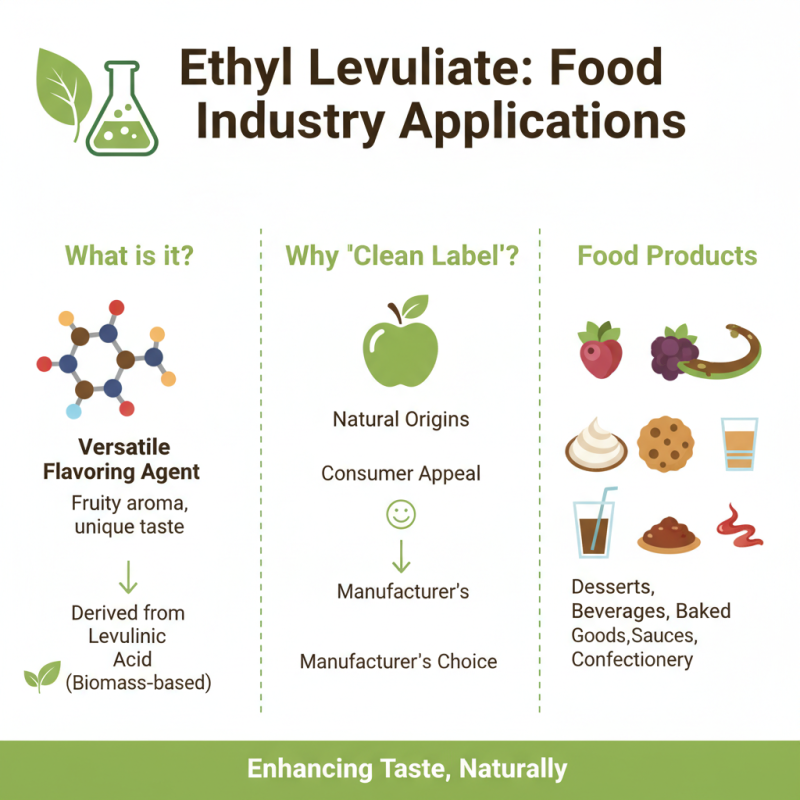
Ethyl levulinate is gaining traction in the food industry as a versatile flavoring agent. With its pleasant fruity aroma, it adds a unique taste to various food products. This compound is derived from levulinic acid, often produced from biomass. Its natural origins appeal to manufacturers seeking clean-label ingredients.
Applications of ethyl levulinate are diverse. It is commonly used in beverages, baked goods, and confectionery. For instance, it enhances the flavor profile of fruit juices and soft drinks. However, the ingredient isn’t universally accepted in all markets. Some cultures may view synthetic flavors more favorably, which can hinder its widespread adoption.
Despite its benefits, the use of ethyl levulinate comes with challenges. The market must address potential allergens and reactions in sensitive individuals. Moreover, sourcing sustainable feedstocks for production is still a work in progress. While it shows promise, manufacturers must navigate issues of consumer acceptance and ingredient sustainability.
Role of Ethyl Levulinate in Biochemical Research and Development
Ethyl levulinate is a chemical compound that plays a significant role in biochemical research and development. It is derived from renewable sources, making it an attractive option for sustainability. Researchers are particularly interested in its versatile applications. Ethyl levulinate can be used as a solvent, a flavoring agent, and a building block in organic synthesis.
In the field of biochemical research, ethyl levulinate is often investigated for its potential as a biofuel. This fuel exhibits a high energy yield and low emissions. Experiments show promise for its use in engines modified for alternative fuels. The chemical's unique properties make it an essential subject in studies focused on developing eco-friendly fuel alternatives.
Ethyl levulinate's role extends to medicinal chemistry, where it may serve as a precursor for drug synthesis. Its potential in this area is still under exploration, requiring more in-depth studies. The understanding of its behavior in biological systems is not fully understood yet. As researchers delve deeper, they may encounter challenges in scalability and consistency, which necessitates careful consideration. Ethyl levulinate represents both opportunity and complexity in biochemical applications.
Market Trends and Demand for Ethyl Levulinate Globally
Ethyl levulinate has seen increasing interest in global markets. This compound is derived from levulinic acid and serves various applications. Its versatility makes it valuable across several sectors, including food, cosmetics, and pharmaceuticals. The growing demand for natural ingredients propels its use. Ethyl levulinate is celebrated for its pleasant aroma and effectiveness as a solvent.
Market trends indicate a shift towards sustainable and biodegradable products. Ethyl levulinate meets this criteria, appealing to environmentally-conscious consumers. Furthermore, the rise of clean-label products drives its adoption in the food industry. However, challenges remain. Limited awareness among manufacturers about its benefits can hinder growth.
Another aspect to consider is the fluctuation in raw material prices. This can impact production costs and overall market stability. Companies must navigate these factors to leverage ethyl levulinate effectively. Ongoing research and development are essential for exploring new applications and improving its economic viability. This focus on innovation can enhance market presence, but attention must be given to potential regulatory changes.
Sustainability and Environmental Impact of Ethyl Levulinate Usage
Ethyl levulinate is gaining attention for its potential in sustainable practices. As a renewable chemical, it has applications in solvents, fragrances, and food additives. Its production from biomass aligns well with green chemistry principles. This brings a significant reduction in reliance on fossil fuels. However, challenges remain in large-scale production.
The environmental impact of ethyl levulinate is often debated. On one hand, it is biodegradable, making it a safer alternative. On the other hand, the sourcing of biomass can lead to land use changes. Such changes can affect local ecosystems. Striking a balance is crucial. There's a need for more research on its lifecycle.
Ethyl levulinate can potentially replace less sustainable chemicals. But further innovations in production methods are necessary. Companies must approach this chemical with caution. Ensuring sustainable practices is essential to avoid negative consequences. Continuous evaluation of its impact will help in making informed decisions. The path forward is complex and requires careful consideration.