How to Get the Most Benefits from Vitamin B Complex?
Vitamin B Complex plays a crucial role in our overall health. It consists of eight essential vitamins that support energy production and brain function. Many people overlook these nutrients, leading to potential deficiencies.
Incorporating Vitamin B Complex into your daily routine can enhance your well-being. Foods like leafy greens, whole grains, and eggs provide these vitamins naturally. However, not everyone gets enough from their diet alone. Supplements may be necessary for some individuals.
It’s essential to understand how to maximize the benefits of Vitamin B Complex. Balance is key, and excessive intake can lead to unwanted side effects. Reflecting on your own diet can help identify gaps in nutrient intake. Striving for a balanced approach can empower you to make better health choices.
Understanding Vitamin B Complex: Types and Functions
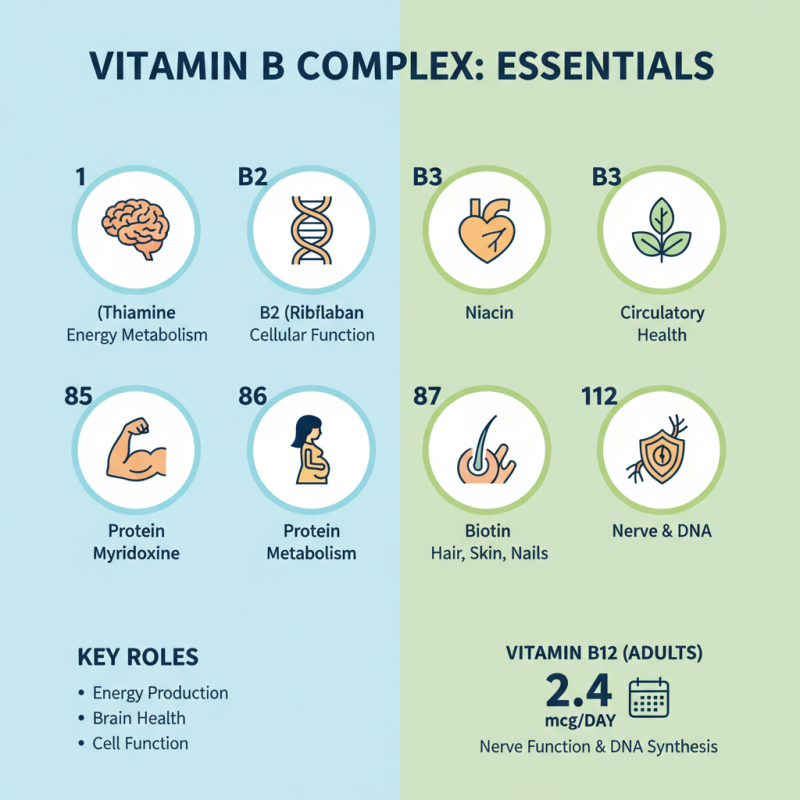
Vitamin B complex is essential for overall health. It includes eight different vitamins. Each type plays a unique role in our body. For example, B1 (thiamine) boosts energy production. B2 (riboflavin) supports skin health and vision. Studies show that B6 (pyridoxine) is vital for mood regulation and cognitive function, affecting over 20% of the population.
Deficiencies in these vitamins can lead to serious health issues. In fact, about 30% of older adults are deficient in B12, which is critical for nerve health. A lack of B9 (folate) can cause anemia. Symptoms often go unnoticed in the early stages. Many people do not realize that stress can deplete these vitamin levels. Regular checks and a balanced diet can help combat these issues.
When considering supplementation, not all forms are created equal. Some compounds are more bioavailable than others. Research suggests that natural forms may be absorbed better. Taking vitamin B complex in conjunction with healthy foods is beneficial. Make sure to consult with a healthcare professional before starting any new regimen.
Identifying Dietary Sources of Vitamin B Complex
Vitamin B complex is crucial for various bodily functions. To fully benefit from it, understanding dietary sources is essential. These vitamins are water-soluble, meaning they cannot be stored in the body. They need to be consumed regularly. The B vitamins include B1 (thiamine), B2 (riboflavin), B3 (niacin), B5 (pantothenic acid), B6 (pyridoxine), B7 (biotin), B9 (folate), and B12 (cobalamin).
Foods rich in B vitamins include whole grains, meat, poultry, fish, eggs, dairy, legumes, seeds, and nuts. A report from the National Institutes of Health indicates that many people do not get enough B vitamins from their diet. For example, about 10% of the population is deficient in B12. Deficiencies can lead to fatigue, anemia, and neurological issues. It’s concerning that certain dietary preferences, like vegetarianism, may lead to inadequate B12 intake.
Many overlook the importance of greens, which are excellent sources of folate. Spinach and kale should be regular parts of meals. While fortified foods provide some help, they shouldn't replace actual food sources. Focusing solely on supplements can be misleading. Not everyone absorbs vitamins the same way. Personal dietary habits need constant reflection. Identifying key sources allows for a more balanced approach to health.
Recommended Daily Allowances for Vitamin B Complex
Vitamin B complex consists of eight essential vitamins. Each plays a crucial role in maintaining good health. The recommended daily allowances (RDAs) vary by age, gender, and life stage. For adults, the RDA for vitamin B12 is 2.4 micrograms. This nutrient is vital for nerve function and DNA synthesis.
Looking at vitamin B6, the RDA stands at 1.3 milligrams for adults. It aids in protein metabolism and cognitive development. Women who are pregnant need a slightly higher intake. The RDA for them is 1.9 milligrams. This increase reflects the nutrient’s role in fetal growth and development.
Folic acid, another member of the B complex, has an RDA of 400 micrograms. It is crucial for cell division and the production of DNA. Many Americans do not meet this requirement. A 2021 study indicated that 50% of women in childbearing age are deficient. This highlights the need to enhance awareness around dietary sources. Eating a varied diet and considering supplementation can support better outcomes. Tracking daily intake can be beneficial, especially for those at risk of deficiency.
How to Maximize Absorption of Vitamin B Complex
To maximize the absorption of Vitamin B Complex, understanding digestive health is essential. The body needs a well-functioning gut to effectively absorb these nutrients. According to research, nearly 70% of adults experience some form of digestive issues that can hinder nutrient absorption. Fiber-rich foods can help improve gut health, making it easier for Vitamin B to be utilized.
Combining Vitamin B with other nutrients can enhance its absorption. For instance, Vitamin C is known to improve the uptake of certain B vitamins. A study noted that individuals who consumed citrus fruits alongside B vitamins experienced a 30% increase in absorption rates. Including healthy fats in your meals can also aid in the absorption of fat-soluble vitamins.
Timing can play a vital role too. Taking Vitamin B when the stomach is slightly full can make a difference. Some people find themselves forgetting to take their vitamins regularly. Others may take them at the wrong time. It's important to create a routine to ensure the body gets the most benefit. Drinking plenty of water can also help; it is essential for nutrient transport in the body.
Potential Benefits and Risks of Vitamin B Complex Supplements
Vitamin B complex supplements can provide a range of potential benefits. These vitamins play a crucial role in energy production, brain health, and red blood cell formation. They are essential for maintaining overall well-being. People often turn to B vitamins to combat fatigue and improve mood.
However, there are risks associated with taking these supplements. Overconsumption of certain B vitamins, like B6, can lead to nerve damage. This can happen with high doses over time. Some individuals may also experience gastrointestinal issues. It's wise to approach supplementation with caution.
Regular dietary sources are the best way to obtain these vitamins. Foods like whole grains, leafy greens, and meats are rich in B vitamins. A balanced diet should be prioritized over supplements. Some might rely too heavily on pills instead of real food. It’s important to assess your unique needs and consult with a healthcare provider before starting any new supplement routine.
Benefits of Vitamin B Complex
This chart illustrates the potential benefits of Vitamin B Complex supplements across various dimensions. The values represent the effectiveness level of each benefit, highlighting their significance in health maintenance.