What is Triethyl Citrate and Its Uses in Global Supply Chain?
Triethyl Citrate is a versatile compound widely used across various industries. It serves as a plasticizer, a solvent, and an emulsifier, making it essential in food, cosmetics, and pharmaceuticals. According to a report by MarketsandMarkets, the global plasticizers market is projected to reach USD 10.91 billion by 2025, with Triethyl Citrate playing a notable role due to its non-toxic properties.
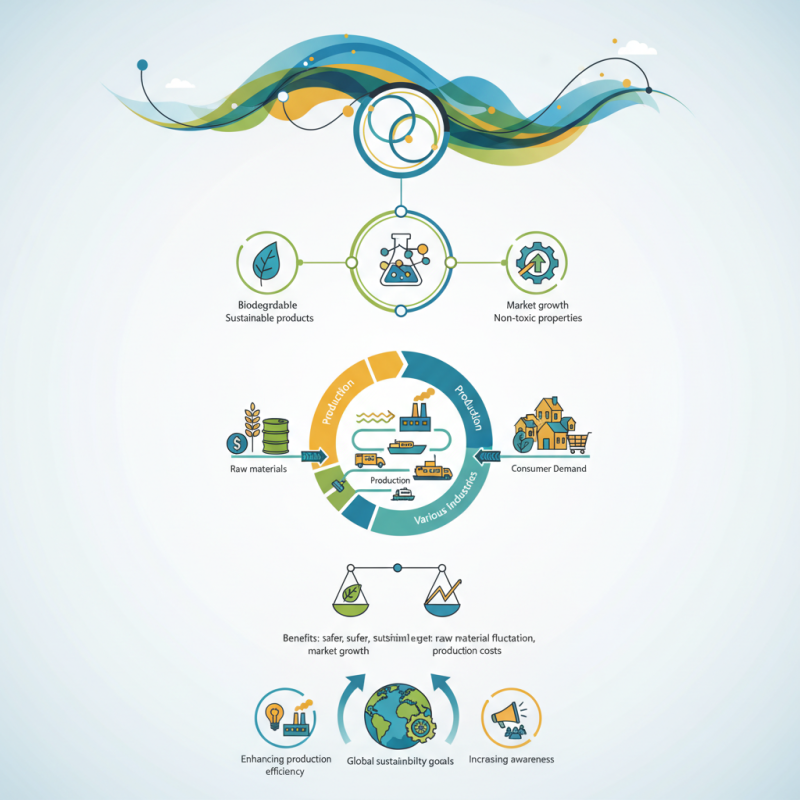
As consumer demand for safer and more sustainable products rises, Triethyl Citrate holds a competitive edge. Its biodegradable nature positions it favorably against traditional plasticizers. Industry experts report that many manufacturers are transitioning to greener alternatives. However, the supply chain for Triethyl Citrate can be complex and poses challenges. Fluctuations in raw material availability and production costs can affect market stability.
Overall, while Triethyl Citrate offers many benefits, there are areas for improvement. Enhancing production efficiency and increasing awareness of its advantages could bolster its usage. Aligning with global sustainability goals ensures Triethyl Citrate remains relevant in a competitive market.
What is Triethyl Citrate? Key Chemical Properties and Structure
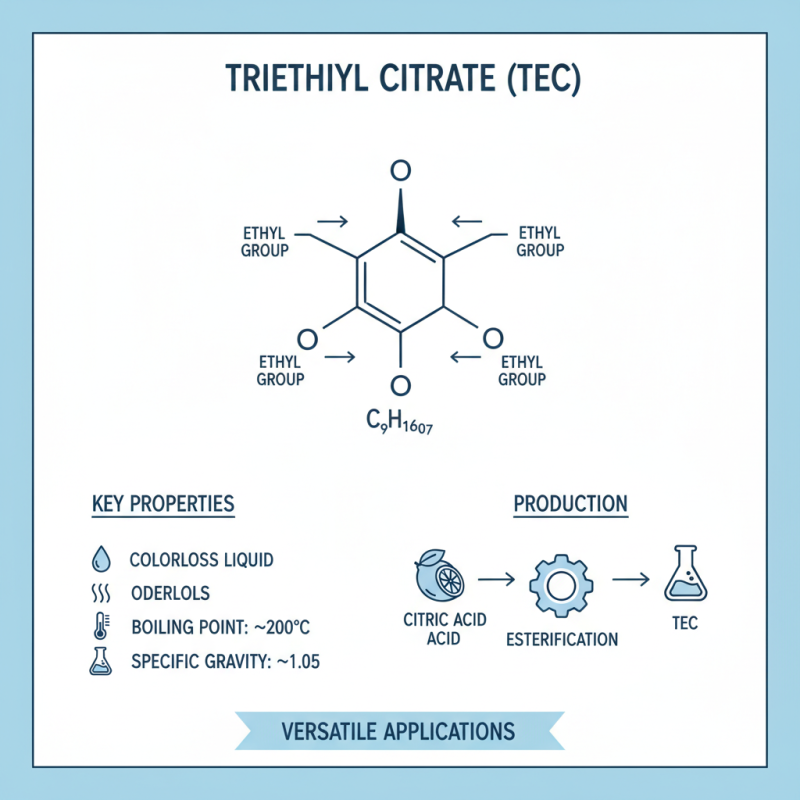
Triethyl Citrate (TEC) is a colorless, odorless liquid. It is produced from citric acid and ethanol through esterification. TEC has a specific gravity of approximately 1.05 and a boiling point of about 200°C. Its molecular formula is C9H16O7, which indicates the presence of three ethyl groups attached to a citrate backbone. This structure contributes to its versatility across various applications.
In the global supply chain, TEC serves as a plasticizer in food packaging materials. According to industry reports, the demand for eco-friendly plasticizers like TEC has increased by around 25% over the past few years. It is also used in cosmetics and personal care products due to its skin-friendly properties. However, there are challenges associated with sourcing and production. Some manufacturers may face difficulties in maintaining consistent quality due to variations in raw material sources.
The rise of regulatory compliance also necessitates continuous examination of TEC's safety profiles. As consumer awareness grows, manufacturers must address these concerns. Data from market research highlights that companies focusing on sustainable practices see a 30% improvement in brand loyalty. Nevertheless, the industry's transition to greener alternatives is not without its hurdles, requiring ongoing adjustments and strategic planning.
Global Production Volume of Triethyl Citrate: Trends and Forecasts
The global production volume of triethyl citrate has been growing steadily. This compound, widely used as a plasticizer and solvent, has become essential in various applications. Industries like pharmaceuticals and food packaging rely heavily on its properties. The demand for eco-friendly alternatives is also rising.
Currently, Asia dominates triethyl citrate production. Countries like China and India are leading in manufacturing capacity. However, the market faces challenges, including fluctuating raw material prices and regulatory hurdles. These factors can hinder future growth. Companies need to adapt to maintain their competitive edge.
Forecasts suggest that demand will continue to rise in the coming years. Increased awareness of health and environmental issues is driving this trend. The potential for innovation in biobased production methods could change the landscape. Despite these advancements, companies must remain vigilant. Supply chain disruptions could impact this promising market.
Applications of Triethyl Citrate in Pharmaceuticals and Food Industry
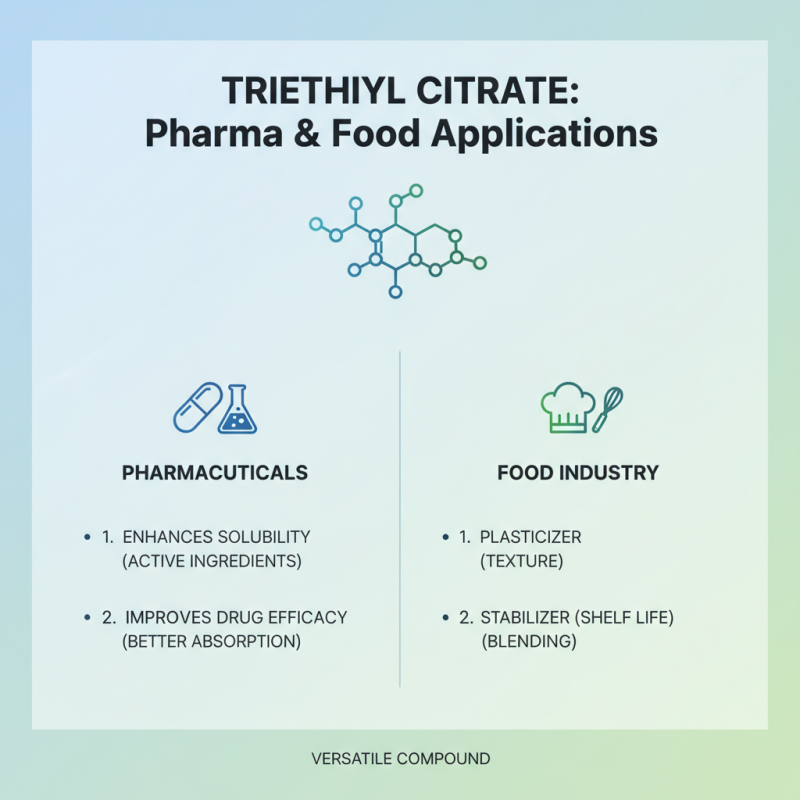
Triethyl citrate is a versatile compound often found in the pharmaceuticals and food industries. It serves as a plasticizer, stabilizer, and emulsifier. In pharmaceuticals, it enhances the solubility of active ingredients, improving drug efficacy. This results in better absorption and therapeutic outcomes for patients.
In the food industry, triethyl citrate acts as a flavoring agent and excipient. It helps maintain product consistency, ensuring a pleasant texture and taste. The demand for safer alternatives has led to its popularity, especially in clean-label products.
Tips: When selecting ingredients like triethyl citrate, always consider quality. Not all products are created equal. Look for suppliers who provide detailed sourcing information.
Despite its benefits, some industries face challenges incorporating triethyl citrate. Regulatory hurdles can impede its use. It's essential for manufacturers to stay updated on guidelines. Balancing innovation with compliance is crucial for success.
Tips: Regular training and updates for staff can mitigate these challenges. Knowledge is power in a rapidly changing industry.
Impact of Triethyl Citrate on Global Supply Chains in Various Industries
Triethyl citrate (TEC) serves as a vital ingredient across various industries, impacting global supply chains significantly. As a plasticizer and solvent, TEC is widely used in food packaging, personal care products, and pharmaceuticals. The global market for triethyl citrate is expected to reach approximately $900 million by 2025, indicating a growing demand in diverse sectors. The versatility of TEC allows it to replace harmful plasticizers, positioning it as a safer alternative.
However, relying heavily on a single compound can pose risks. Supply disruptions—due to natural disasters or geopolitical tensions—can affect the availability of raw materials. For instance, disruptions in the petrochemical industry impact the production of triethyl citrate, leading to price fluctuations. Reports indicate a 15% increase in costs for raw materials this past year, affecting manufacturers and consumers alike. Such challenges remind us of the fragility of supply chains and the need for diversification in sourcing.
Moreover, regulatory changes can further complicate the supply landscape. New environmental policies may impose restrictions on certain chemical compounds. This could force industries to adapt quickly, potentially leading to shortages of compliant substitutes. Companies must remain agile, continuously monitoring regulatory conditions and market trends to mitigate risks. Proper contingency planning is essential in maintaining stability within supply chains.
Impact of Triethyl Citrate on Global Supply Chains in Various Industries
This chart illustrates the usage of Triethyl Citrate across different industries, showing its impact on global supply chains.
Sustainability and Environmental Considerations in Triethyl Citrate Production
Triethyl citrate (TEC) is gaining attention for its sustainability profile in various applications, including food and cosmetics. Its production relies on renewable resources, unlike conventional petrochemical processes. A report from the European Bioplastics Association indicates that bio-based materials can reduce CO2 emissions by up to 80% compared to fossil-based alternatives. This data reflects a significant push towards greener chemistry in the global supply chain.
Despite these benefits, challenges exist. The source of biomass can impact sustainability, depending on agricultural practices. Reports show that large-scale agricultural production can lead to land use changes, affecting biodiversity. The global supply chain for TEC must address these issues to avoid unintended consequences. Transparency in sourcing and production is vital for sustainability claims.
Moreover, regulatory frameworks play a crucial role. Governments are increasingly focused on reducing environmental footprints. The European Commission has mandated stricter guidelines for chemical production, including bioplastics and their derivatives. This regulation can affect the availability and cost of TEC. As industries strive to adopt more sustainable practices, ongoing assessments are essential. Reinforcing the importance of responsible sourcing and production can enhance TEC's role in a more sustainable global supply chain.
What is Triethyl Citrate and Its Uses in Global Supply Chain? - Sustainability and Environmental Considerations in Triethyl Citrate Production
| Dimension |
Data |
| Chemical Name |
Triethyl Citrate |
| CAS Number |
77-94-1 |
| Molecular Formula |
C9H16O7 |
| Use in Food Industry |
Flavoring agent, food preservative |
| Use in Cosmetics |
Skin conditioning agent, emulsifier |
| Environmental Impact |
Biodegradable, lower toxicity compared to other esters |
| Sustainability Practices |
Renewable resources for production |
| Market Growth Rate |
7.5% CAGR from 2020 to 2025 |