How to Use Azelaic Acid for Acne and Skin Brightening?
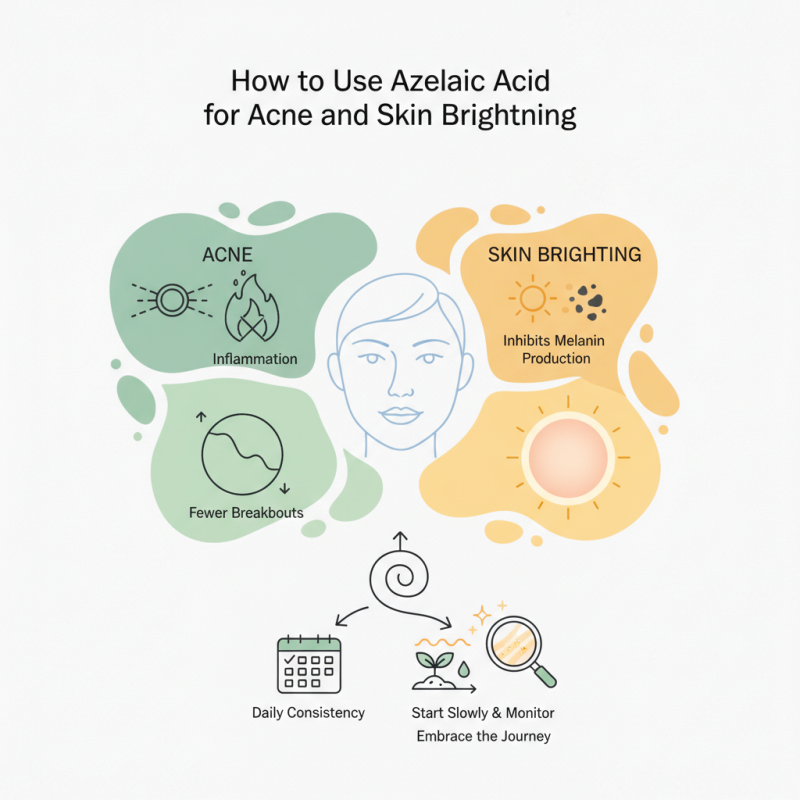
Azelaic Acid is a powerful ingredient for skincare. Many people struggle with acne and uneven skin tone. This natural acid can help address both issues effectively. It works by unclogging pores and reducing inflammation. This means fewer breakouts and a smoother complexion.
Using Azelaic Acid can also brighten your skin. It inhibits melanin production, which helps fade dark spots. Over time, your skin may appear more radiant and even-toned. However, results take time, and consistency is key. Applying it daily might be challenging but is essential for success.
Remember, everyone’s skin is different. It’s vital to start slowly and monitor your skin’s response. Some may experience irritation initially. Adjusting the frequency or concentration can help. Embracing this journey involves learning about your skin’s needs while using Azelaic Acid.
What is Azelaic Acid and How Does It Work on Skin?
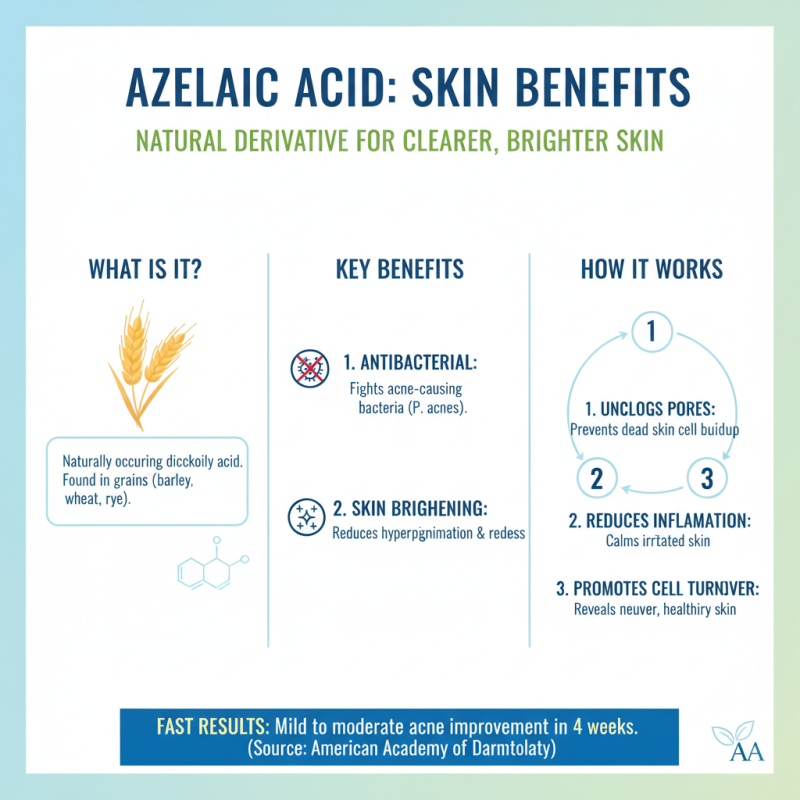
Azelaic acid is a naturally occurring dicarboxylic acid found in grains like barley and wheat. Known for its antibacterial properties, it helps combat acne and enhances skin brightness. According to a report by the American Academy of Dermatology, azelaic acid is effective in treating mild to moderate acne with results often seen in as little as four weeks.
This acid works by inhibiting the growth of acne-causing bacteria and reducing inflammation. It also accelerates cell turnover, which can prevent clogged pores. Studies indicate that tampering with pigmentation can lead to improved skin tone and texture. Some individuals may experience irritation or dryness during the initial usage phase, highlighting the importance of gradual introduction into a skincare routine.
While azelaic acid has significant benefits, results can vary among users. Inconsistent application may yield disappointing outcomes. Regularly using a moisturizer alongside azelaic acid can help minimize side effects. Monitoring your skin's reaction can facilitate a tailored approach that maximizes benefits while addressing any discomfort. Understanding your skin's unique needs is crucial for the best results.
Benefits of Azelaic Acid for Acne Treatment
Azelaic acid is gaining popularity for treating acne. It works by reducing the growth of bacteria that causes breakouts. Many people notice a significant decrease in their acne after consistent use. However, results can vary widely from person to person. Patience is essential.
In addition to fighting acne, azelaic acid helps brighten skin. It can reduce dark spots and improve overall skin tone. The ingredient inhibits melanin production, which can help those prone to hyperpigmentation. Users often see a more even complexion over time, though it may take several weeks to notice a change.
The texture of azelaic acid is often gentle. This quality makes it suitable for sensitive skin types. However, some may experience initial irritation, like redness or dryness. It's important to start with a small amount. Observing how your skin reacts can guide further use. Overall, incorporating azelaic acid requires thoughtful consideration and a commitment to a regular skincare routine.
How to Use Azelaic Acid for Acne and Skin Brightening? - Benefits of Azelaic Acid for Acne Treatment
| Aspect |
Details |
| What is Azelaic Acid? |
A dicarboxylic acid naturally found in grains, used for its anti-inflammatory and antioxidant properties. |
| How it Works for Acne |
Reduces the growth of acne-causing bacteria and keratinization, helping unclog pores. |
| Skin Brightening Effect |
Inhibits tyrosinase, reducing hyperpigmentation and dark spots. |
| Recommended Usage |
Apply a small amount twice daily after cleansing and before moisturizer. |
| Possible Side Effects |
Mild irritation, redness, or dryness, mostly temporary. |
| Skin Types |
Safe for most skin types, including sensitive skin. |
| Combination with Other Treatments |
Can be used with other acne treatments, but consult a dermatologist. |
Using Azelaic Acid for Skin Brightening: A Step-by-Step Guide
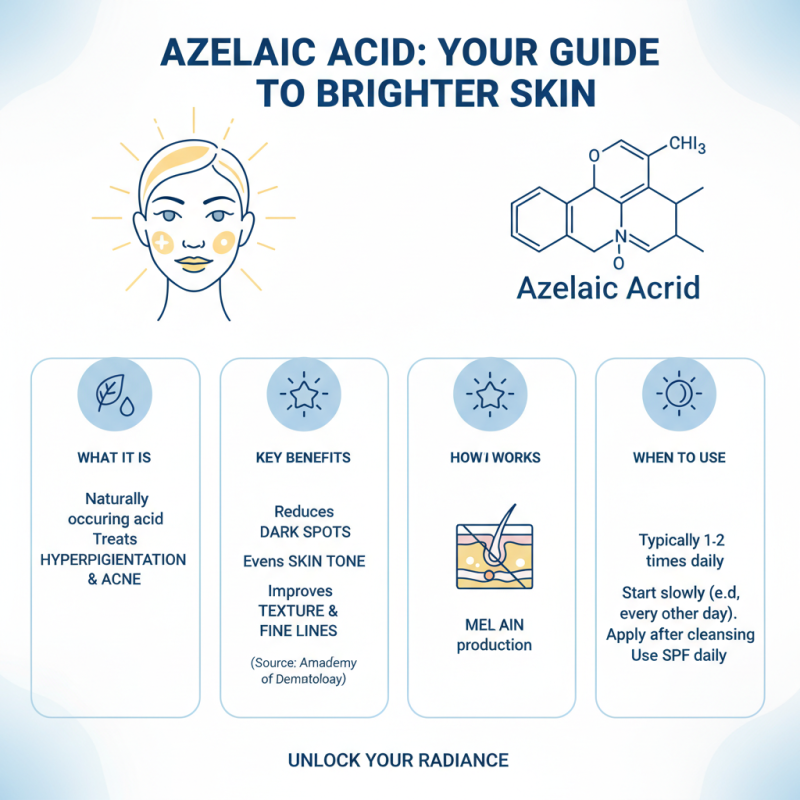
Azelaic acid is gaining popularity for its skin-brightening properties. This naturally occurring acid is effective in treating hyperpigmentation and acne. According to research from the American Academy of Dermatology, azelaic acid can reduce fine lines and improve skin texture. It helps in inhibiting melanin production, making it a great choice for brightening uneven skin tones.
Start using azelaic acid cautiously. Begin with a patch test to avoid irritation. Apply a small amount to your jawline or wrist and wait 24 hours. If there's no reaction, integrate it into your routine. Apply it once daily, preferably at night. Gradually increase usage based on your skin's tolerance. During the day, remember to wear sunscreen. The combination of azelaic acid and sun protection can enhance results significantly.
Keep in mind that results may not be instant. Some users report minimal improvement after a month. It's essential to remain patient and consistent. Skin can react differently to products. Tracking progress through photos can be enlightening. This approach may reveal subtle changes that a daily glance can miss. Stay mindful of how your skin responds.
How to Incorporate Azelaic Acid in Your Skincare Routine
Incorporating azelaic acid into your skincare routine can be transformative. Studies indicate that this ingredient effectively targets acne and promotes skin brightening. About 20% of people using azelaic acid report significant improvement in their acne within four weeks. It’s crucial to start slowly; introduce it two to three times a week. Gradually increase usage based on your skin’s response.
When applying azelaic acid, ensure your face is clean. A pea-sized amount is sufficient. Apply it evenly, avoiding the eye area. After application, consider using a moisturizer to prevent dryness. Some users experience initial redness or stinging. This is normal, but if it persists, reflect on your usage frequency. Finding the right balance is essential for optimal results.
Using azelaic acid during the day can help with pigmentation issues. However, it can increase photosensitivity. Always apply sunscreen afterward. Research shows that daily sunscreen use can enhance the effectiveness of azelaic acid in reducing hyperpigmentation. Remember, consistency is key, but patience is also necessary. It might take time to see desired outcomes. Each skin type reacts differently, and adjustments might be necessary.
Possible Side Effects and Precautions When Using Azelaic Acid
When using azelaic acid, it’s important to be aware of possible side effects. Common reactions may include skin irritation, redness, or dryness. These symptoms can vary in severity depending on skin sensitivity. It's crucial to start with a lower concentration to gauge skin response. Monitor how your skin reacts over a couple of weeks.
Some people may experience more serious side effects. This includes swelling, severe itching, or peeling skin. If these occur, stop using the product immediately. Consult a dermatologist for guidance. It’s necessary to understand that everyone’s skin is different; what works for one person may not suit another.
Additionally, precautions are essential. Always perform a patch test before applying azelaic acid to your entire face. Applying too much too quickly can lead to discomfort. Pair it with a good moisturizer to combat dryness. At times, it requires a bit of trial and error to find the right balance for your skin. Reflecting on your skin's reactions helps in adjusting your routine effectively.
Effectiveness of Azelaic Acid in Treating Acne and Skin Brightening