How to Use Triethyl Citrate for Skin Care and Health Benefits
Triethyl Citrate is garnering attention in the realm of skin care and health benefits due to its multifunctional properties and favorable safety profile. As a natural ester derived from citric acid, it serves not only as a skin conditioning agent but also as a solvent, making it a valuable ingredient in various cosmetic formulations.
According to a market research report by Grand View Research, the global skin care products market is expected to reach USD 183.03 billion by 2025, highlighting the rising demand for innovative and effective ingredients like Triethyl Citrate that enhance both product efficacy and consumer safety.
The skin care industry has witnessed a significant shift towards using more natural and safe ingredients, as consumers increasingly prioritize products that do not compromise their health. Triethyl Citrate has been recognized for its ability to improve skin hydration while acting as a mild exfoliant, which is particularly beneficial for promoting a smooth and youthful complexion.
The International Journal of Cosmetic Science notes that ingredients like Triethyl Citrate align with the growing trend towards green chemistry and sustainability in cosmetic formulations, appealing to a more environmentally-conscious consumer base.
Furthermore, research indicates that the incorporation of Triethyl Citrate into skincare routines can offer added benefits such as improved product absorption and enhanced shelf-life stability. This positions Triethyl Citrate as an essential ingredient in modern skincare regimens as consumers look for effective solutions that contribute positively to their overall skin health.
As we delve deeper into the applications and advantages of Triethyl Citrate, it becomes evident that it holds a promising place in the future of skin care innovation.
Understanding Triethyl Citrate and Its Properties
Triethyl citrate is a versatile compound derived from citric acid, known for its emollient and moisturizing properties. This colorless, odorless liquid has garnered attention in the skincare industry due to its ability to enhance the stability and texture of cosmetic formulations. According to a report by the Personal Care Products Council, triethyl citrate serves as a skin-conditioning agent, offering both humectant and emulsifying attributes, making it an excellent choice for creams and lotions aimed at hydration and skin barrier support.
In addition to its moisturizing capabilities, triethyl citrate also exhibits antimicrobial properties, contributing to the safety and longevity of skincare products. The Journal of Cosmetic Science indicates that incorporating triethyl citrate can improve product efficacy by enhancing the skin's natural defenses against harmful microorganisms. Furthermore, its low toxicity profile makes it a preferred ingredient in formulations designed for sensitive skin. As a result of these benefits, the demand for triethyl citrate in the cosmetic market is on the rise, reflecting a growing consumer interest in safe and effective skin care solutions.
How to Use Triethyl Citrate for Skin Care and Health Benefits
| Property |
Description |
Skin Benefits |
Health Benefits |
| Chemical Structure |
Triethyl Citrate is an ester of citric acid and ethanol. |
Helps to hydrate and nourish the skin. |
Can help in digestive health when consumed. |
| Solubility |
Soluble in both water and oil. |
Enhances absorption of other active ingredients. |
May aid in reducing cholesterol levels. |
| Skin Type Compatibility |
Suitable for all skin types, including sensitive skin. |
Reduces irritation and soothes the skin. |
Supports liver function and detoxification. |
| Uses in Skin Care |
Commonly used in moisturizers, creams, and serums. |
Improves skin texture and radiance. |
May help to alleviate metabolic disorders. |
| Safety Profile |
Generally recognized as safe for topical use. |
Minimal risk of irritation or allergic reactions. |
Consult a healthcare provider for consumption. |
Benefits of Triethyl Citrate in Skin Care Products
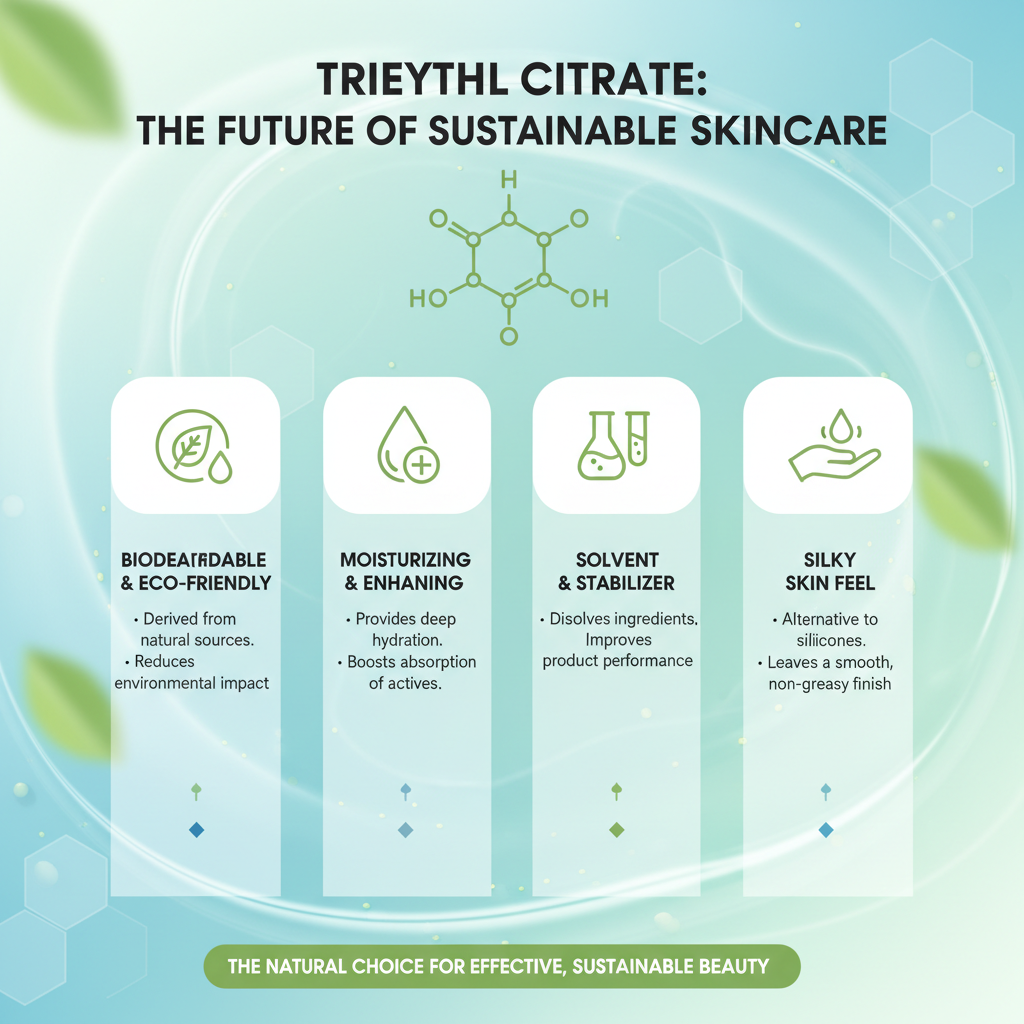
Triethyl citrate is gaining attention as a beneficial ingredient in skin care products due to its numerous advantages. As a biodegradable compound, it not only offers moisturizing properties but also acts as a solvent, enhancing the effectiveness of other active ingredients. This feature makes triethyl citrate an ideal choice for formulators looking to create eco-friendly products while maintaining product performance. Its ability to provide a silky texture and improve skin feel parallels some traditional silicone agents, making it a desirable alternative for consumers seeking sustainable solutions.
Recent developments in cosmetic formulations highlight the versatility of triethyl citrate, particularly in deodorant products, where it helps to stabilize the formulation while imparting a pleasant sensory experience. Additionally, its incorporation in various formulations contributes antioxidant properties, potentially aiding in skin protection against environmental stressors. As consumers become more ingredient-conscious, the inclusion of triethyl citrate not only meets the demand for safer, environmentally friendly products but also aligns with the growing trend of transparency and efficacy in skin care.
How to Incorporate Triethyl Citrate into Your Skin Care Routine
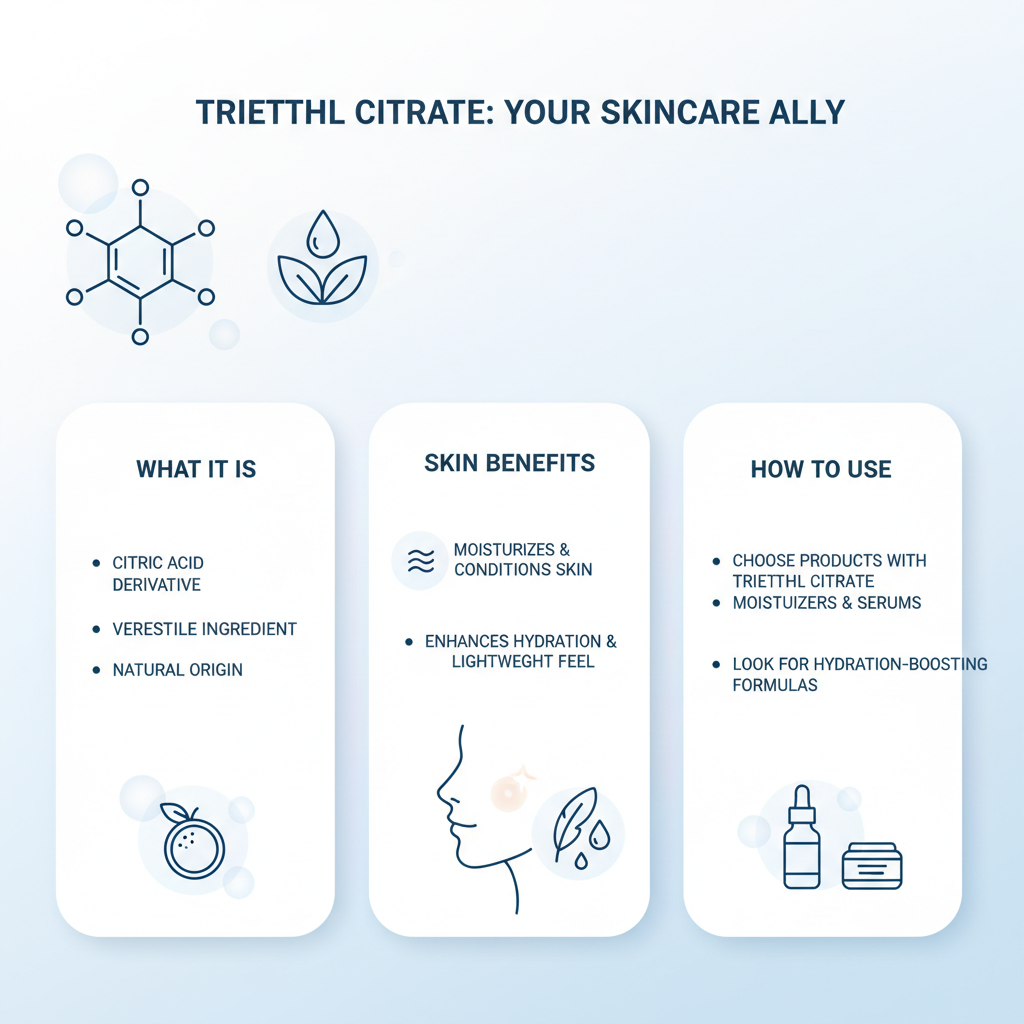
Triethyl citrate, a versatile ingredient derived from citric acid, is becoming increasingly popular in skincare formulations due to its moisturizing and skin-conditioning properties. To incorporate triethyl citrate into your skincare routine, start by choosing products that contain this ingredient, such as moisturizers or serums. Look for formulations specifically designed to enhance hydration, as triethyl citrate helps maintain skin moisture levels while providing a lightweight feel.
Tips: When incorporating triethyl citrate into your regimen, consider layering products. Start with a hydrating toner, followed by a serum enriched with triethyl citrate, and seal it in with a rich moisturizer. This multi-layered approach not only maximizes hydration but also allows the benefits of triethyl citrate to penetrate deeper into the skin.
If you prefer DIY skincare, you can create your own serum by mixing triethyl citrate with other beneficial oils or extracts. Combine it with ingredients like hyaluronic acid or vitamin E for added nourishment. Always patch-test new formulations on a small area of your skin to avoid any potential irritation, ensuring that your skincare routine enhances your overall skin health effectively.
Safety and Precautions When Using Triethyl Citrate
When using triethyl citrate in skin care, safety precautions are essential to ensure it benefits the skin without causing irritation or adverse effects. First and foremost, it is crucial to perform a patch test before using any product containing triethyl citrate, especially for those with sensitive or allergic skin. Apply a small amount to a discreet area and wait 24 hours to check for any reactions such as redness, itching, or swelling. If no adverse effects occur, it is likely safe for broader application.
Additionally, individuals should be aware of the concentration levels in the products they choose. High concentrations of triethyl citrate can lead to skin dryness or irritation. It is advisable to start with products that contain lower concentrations and gradually increase if needed, while closely monitoring the skin's response. Furthermore, keeping track of sunlight exposure is vital when using products with triethyl citrate, as some individuals may experience increased photosensitivity. Always consult with a dermatologist if uncertain about incorporating new ingredients into your skincare routine, ensuring that your skin remains healthy and vibrant.
Benefits of Triethyl Citrate in Skin Care
This bar chart illustrates the effectiveness of triethyl citrate in various skin care benefits. It helps to keep the skin moisturized, acts as an antimicrobial agent, supports the skin barrier, provides anti-inflammatory effects, and conditions the skin, all contributing to healthier skin.
Comparing Triethyl Citrate with Other Skin Care Ingredients
Triethyl citrate is gaining popularity in the skincare industry due to its unique properties. Compared to traditional emollients like mineral oil and silicone, triethyl citrate is lighter and absorbs quickly into the skin, providing a non-greasy finish. This makes it an excellent choice for those with oily or combination skin who wish to avoid heavy, occlusive products. Additionally, it has humectant properties that help retain moisture, making it suitable for dry skin types as well.
When considering other natural alternatives, such as jojoba oil and shea butter, triethyl citrate stands out for its ability to enhance product stability and extend shelf life without compromising skin benefits. It also serves as a solvent for active ingredients, promoting better absorption in topical formulations. This versatility allows formulators to create products that are both effective and pleasant to use.
**Tips:**
1. Always patch test new products containing triethyl citrate to ensure compatibility with your skin type.
2. Look for formulations that combine triethyl citrate with other hydrating ingredients, such as hyaluronic acid, for optimal hydration.
3. Consider using products with triethyl citrate in humid conditions, as its lightweight formula works well in keeping skin hydrated without a heavy feel.