Levulinic acid is drawing global interest because it links renewable feedstocks with practical chemical applications. Produced from carbohydrate-rich biomass, it can serve as an intermediate for solvents, resins, coatings, and other specialty products. The U.S. Department of Energy’s 2004 report, Top Value Added Chemicals from Biomass, listed levulinic acid among 12 promising biomass-derived building blocks. That is an important signal, not a guarantee of commercial success. Production costs, feedstock consistency, and customer qualification still shape adoption.
Market research firms, including Grand View Research, track the levulinic acid market and forecast continued growth, while noting demand across several end-use sectors. Estimates vary by report because market boundaries and forecast methods differ. Readers should treat any single market-size figure with care. The opportunity is real, but it is not uniform.
Biomass-conversion researchers T. Werpy and G. Petersen helped establish the DOE assessment. A fair paraphrase of their report’s message is: “Levulinic acid is valuable when its conversion routes make biomass-derived products practical.” The wording here is a paraphrase, not a direct quotation. That distinction matters. In a plant, the promise must survive heat, pressure, purification, and cost calculations. A promising molecule is only part of the story. This article examines why Levulinic Acid is in high demand worldwide, where interest is strongest, and what could slow its wider adoption.
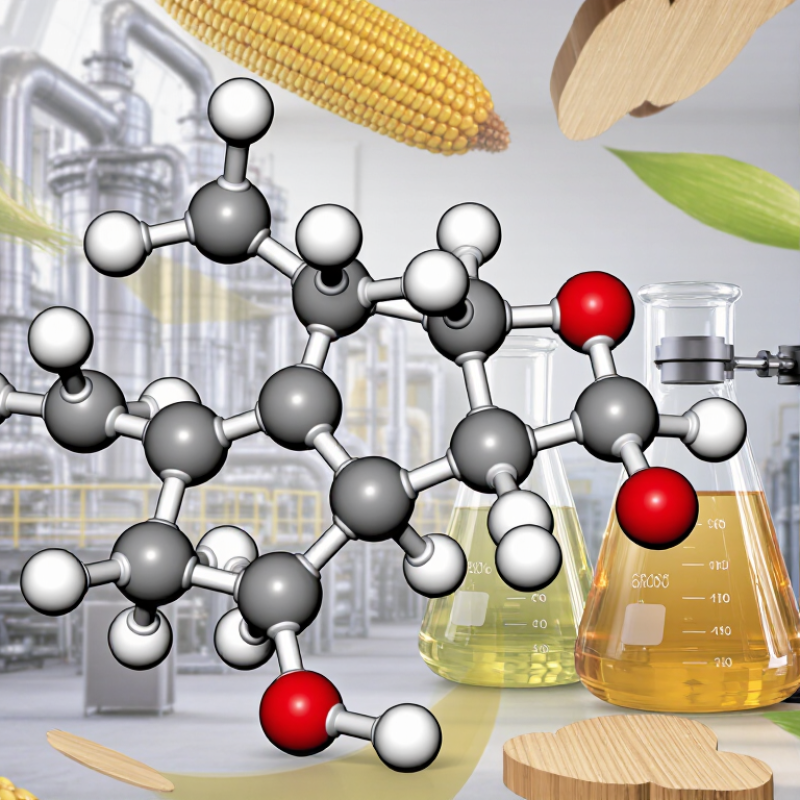
Levulinic acid is a small organic acid that can be made from plant-based materials. These include crop residues, wood, and other sources of cellulose. In its purified form, it is typically a clear liquid or solid depending on temperature. Its structure gives it useful chemical functionality, but the starting material and production method affect the final product’s quality.
Production often begins by preparing biomass so its cellulose is more accessible. The material is treated with an acid and heat, breaking complex carbohydrates into smaller sugars. Some sugars then form an intermediate called hydroxymethylfurfural. Further reaction produces levulinic acid, usually alongside formic acid. The route sounds straightforward on paper. Real feedstocks are less predictable.
Plant matter varies in moisture, composition, and particle size, so operators must control reaction conditions and test each batch. Unwanted solid byproducts can form, too, making separation and purification important. The process may also require substantial heat and careful handling of acidic mixtures. That is a real limitation, not a footnote. Researchers and producers continue to study ways to improve yields, reduce waste, and use less energy. Exact results depend on the feedstock and process design, so a single yield figure would not describe every facility reliably.
Levulinic acid is a platform chemical that can be produced by acid-catalyzed conversion of sugars from biomass. The chart shows the theoretical product mass distribution for the idealized reaction: glucose → levulinic acid + formic acid + water. Actual processes can produce by-products and therefore have lower levulinic acid yields.
Levulinic acid is useful because one small molecule carries both a ketone group and a carboxylic acid group. Each site can take part in different chemical reactions. This gives manufacturers several routes to make derivatives, including esters and gamma-valerolactone. Its water solubility also helps when processing aqueous biomass streams. Practical advantage: fewer awkward phase changes.
The U.S. Department of Energy’s 2004 report, Top Value Added Chemicals from Biomass, identified levulinic acid among 12 promising building blocks obtainable from sugars. That screening result reflects its chemical flexibility, not proof that every conversion is economical at commercial scale. Costs, feedstock quality, and processing conditions still matter. The report is a useful technical reference, but it is not a current market forecast.
The molecule’s polarity can be helpful in water-based processing, yet it can also complicate separation from dilute mixtures. Its two reactive groups offer options, but they demand control: unwanted side reactions may reduce yield. In a plant, operators must balance conversion, purification, and energy use. Useful, not effortless. That distinction is easy to overlook when a versatile molecule looks good on paper.
Levulinic acid is used less as a finished product than as a flexible chemical intermediate. The U.S. Department of Energy and NREL’s 2004 screening report named it among 12 platform chemicals selected from sugar-derived compounds. That ranking reflects its usefulness: manufacturers can convert it into esters for solvents and formulation ingredients, or into building blocks for materials chemistry. A flexible intermediate.
In chemical production, levulinic acid can also feed routes to gamma-valerolactone and other compounds used in solvent and fuel-related applications. Its derivatives may support resin and plasticizer formulations, while the acid itself can serve as an intermediate in pharmaceutical and agricultural chemical synthesis. These roles connect it to several industries, from materials and specialty chemicals to energy research. Still, a promising pathway is not the same as routine industrial use. Feedstock consistency, conversion costs, and product purity can affect whether a process makes commercial sense. That part is less tidy than the chemistry suggests. NREL’s report identifies potential routes, not proof that every route is widely deployed today.
Global demand for levulinic acid is growing as manufacturers look for versatile chemicals made from renewable feedstocks. It can be produced from biomass, including agricultural residues and woody material. That connection matters. Businesses are exploring alternatives to some fossil-derived inputs while seeking ingredients that fit existing production processes. Levulinic acid also acts as an intermediate for other chemicals, giving it potential uses across several industries.
Its chemical structure makes it useful in developing solvents, resins, additives, and other specialty products. Interest in lower-impact materials is encouraging research and investment, while advances in processing may help turn more plant-based raw materials into useful chemicals. Demand is also supported by manufacturers testing levulinic acid in formulations where performance, supply consistency, and cost all matter. A promising application, however, does not guarantee broad adoption.
The economics remain uneven. Biomass availability, conversion costs, product purity, and transport can affect whether a producer can supply customers reliably. Some applications may also require reformulation or additional testing before manufacturers switch materials. The growth story is real, but not automatic; demand will depend on dependable production and clear performance advantages, not renewable origins alone.
Levulinic acid demand depends on more than its potential uses in solvents, resins, and agricultural products. Grand View Research estimated the global market at about US$29.6 million in 2022 and projected a 9.4% compound annual growth rate through 2030. These are forecasts, not guaranteed sales. Growth depends on whether producers can supply consistent quality at competitive prices. Small changes in biomass cost or conversion yield can affect the final price.
Supply starts with materials such as sugarcane bagasse, corn stover, and wood residues. Their availability shifts with harvest seasons, local processing capacity, and competing uses. A factory may have feedstock nearby, yet still face costly transport or purification. That matters. The International Energy Agency’s 2018 report, The Future of Petrochemicals, estimated that petrochemical feedstocks represented about 14% of global oil demand, underscoring the scale of the conventional supply chain levulinic acid must compete with. Still, forecasts often make supply look smoother than it is. Crop residues are uneven, and new production capacity takes time to build. Future growth will hinge on reliable feedstock contracts, efficient processing, and buyers willing to pay for lower-carbon alternatives. The weak point? Costs can remain stubborn.
| Market factor | Relevant facts | Influence on demand | Influence on supply and outlook |
|---|---|---|---|
| Renewable feedstock interest | Levulinic acid can be produced from carbohydrate-rich biomass, including cellulose and hemicellulose, through acid-catalyzed processing. | Interest in renewable chemical feedstocks can support demand where buyers seek alternatives to some fossil-derived inputs. | Supply depends on sustainable biomass availability, feedstock quality, collection, and transport costs. |
| Platform-chemical versatility | Levulinic acid is a C5 building-block chemical used as an intermediate in the production of other chemicals, including levulinate esters and γ-valerolactone. | Its potential to serve several downstream value chains can broaden its customer base beyond a single end use. | Commercial growth depends on whether downstream products can be made consistently and competitively at scale. |
| Established chemical applications | It is used as a chemical intermediate in areas such as resins, solvents, and the manufacture of selected pharmaceutical and agricultural chemical products. | Existing industrial uses provide demand independent of newer bio-based applications. | Demand varies with downstream production, product specifications, and the availability of substitute intermediates. |
| Fuel and energy-related derivatives | Levulinic acid can be converted into derivatives such as γ-valerolactone, which has been studied for use as a solvent and as a platform for further chemical or fuel-related processing. | Interest in these routes may create additional demand, but commercial adoption depends on performance and economics. | Scale-up, conversion efficiency, process costs, and relevant fuel or chemical standards affect the pace of supply growth. |
| Conversion yield and process design | Biomass conversion involves reaction and separation steps; process conditions influence product yield, by-product formation, and recovery requirements. | More efficient processes can improve product economics and make broader use more feasible. | Low yields, corrosion management, waste handling, and purification needs can constrain output and increase production costs. |
| Purity and customer specifications | Industrial customers require product quality appropriate to their application; purity and impurity profiles can affect downstream performance. | Demand can rise when producers reliably meet application-specific quality requirements. | Consistent purification and quality control are important for dependable supply, especially across different biomass inputs. |
| Production economics | The cost of feedstock, acids, energy, processing, separation, and waste treatment contributes to the delivered cost of the product. | Buyers compare performance and total cost with those of alternative chemicals and production routes. | Higher costs or volatile input prices can delay capacity investment; process improvements can strengthen future supply potential. |
| Policy and sustainability requirements | Policies and procurement standards that encourage renewable materials can influence investment and purchasing decisions, but requirements differ by region and application. | Supportive policies may improve interest in bio-based chemicals; the effect depends on eligibility rules and implementation. | Traceability, lifecycle assessment, and compliance requirements can affect project development and market access. |
| Competing uses for biomass | Agricultural residues and other biomass resources may also be used for energy, animal feed, paper, or other materials. | Competition for feedstock can affect the availability and delivered cost of biomass-based products. | Regional feedstock networks and flexible sourcing can help reduce exposure to supply disruptions. |
| Overall market outlook | Levulinic acid combines established intermediate uses with potential demand from renewable-chemistry pathways. | Long-term interest is supported by application diversity, while actual demand depends on buyer economics and downstream adoption. | Future supply is likely to depend on competitive production costs, reliable biomass sourcing, process scale-up, and consistent product quality. |
Note: Market influences and outlook are qualitative. They describe established chemical and process considerations rather than a specific market-size forecast.
0086-15628869272